Brass bands in Beijing make way for sticker shock at home as Trump returns to escalating inflation
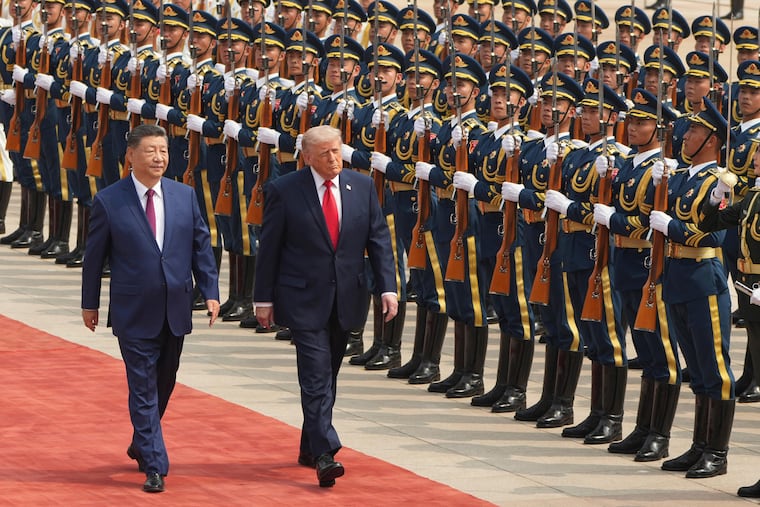
President Trump returned from the pageantry of a Chinese state visit this week to confront an economy that is making his political problems worse, not better. Consumer inflation climbed to 3.8% annually in April, outpacing wage growth and effectively making American workers poorer. The Cleveland Federal Reserve now estimates annual inflation could reach 4.2% in May as the Iran war continues to push oil and gasoline prices higher.
The contrast between Beijing's orchestrated optics and the economic reality at home could not be starker. Trump described the trip as a victory, telling reporters that Boeing would sell 200 aircraft to China and that American farmers would be 'very happy' with soybean purchases. But the Boeing deal fell short of expectations — investors had anticipated a much larger order, and the company's stock declined on the news. There was little concrete information about any actual trade agreements, including Chinese purchases of U.S. liquefied natural gas and beef.
More problematic were Trump's comments before the trip, when he told reporters he doesn't 'think about Americans' financial situation' when making decisions about Iran, saying he thinks only about preventing Iran from obtaining nuclear weapons. The remark drew immediate criticism and undermined Republican efforts to campaign on last year's tax cuts. Vice President JD Vance attempted to clean up the comments, calling them a 'misrepresentation,' and the White House said the administration remains focused on affordability. But the damage was already done.
The inflation picture is getting worse, not better. The 3.8% April reading already exceeds the 3% rate Trump inherited when he returned to office in January 2025 with an explicit mandate to fix prices. Higher inflation is now spreading into the cost of servicing the national debt. The interest rate on 10-year U.S. government debt jumped from 4.36% to 4.6% over the past week, implying higher costs for auto loans and mortgages.
Three overlapping supply shocks are driving the pressure. First, the tariffs Trump imposed last year are now translating into higher clothing prices and other imported goods. Second, the immigration crackdown has reduced the supply of foreign-born workers in sectors like construction and agriculture, pushing up labor costs. Third, the effective closure of the Strait of Hormuz has disrupted roughly 20% of global oil supplies, driving gasoline prices to levels that directly affect household budgets heading into Memorial Day weekend.
Economists are increasingly concerned about the compounding effect. Gregory Daco, chief economist at EY-Parthenon, warned that the layers of supply shocks will 'only further feed into inflationary pressures.' He noted that each shock reinforces the others — tariffs raise import costs, worker shortages raise production costs, and energy disruptions raise transportation costs. The result is an inflationary environment that cannot be addressed by any single policy lever.
The political timing is precarious. Primary elections are underway, and voters heading to the polls are absorbing higher prices for groceries, gasoline, utility bills, and airplane tickets. Democrats are seizing on Trump's comments as evidence of indifference. Senate Democratic leader Chuck Schumer said Americans 'do not see any sympathy, any support, or any plan from Trump and congressional Republicans to lower costs.'
For his part, Trump told Fox News that gasoline prices are 'short-term pain' that will 'drop like a rock' once the Iran war ends. But no end to the conflict is in sight, and the administration's own economic data contradicts the claim that current inflation is merely transitory.
What This Means For You: Inflation at 3.8% and potentially heading to 4.2% means your dollar is losing purchasing power faster than most wage increases can compensate. If you're planning a major purchase — a car, a home, home improvements — the rising interest rates on 10-year Treasuries signal that borrowing costs will continue to climb. For investors, the combination of tariff-driven price increases, labor shortages, and energy disruption creates a challenging environment where both stocks and bonds face headwinds. Consider increasing allocations to inflation-protected securities and commodities if you haven't already. And if you're a small business owner, now is the time to lock in supply contracts before the next round of tariff increases takes effect this summer.
Finance & Markets Editor
Originally sourced from The Philadelphia Inquirer
Related Stories
Young Voters Squeezed by Economy, Distrust in Political System: Poll
A new Harvard Youth Poll paints a sobering picture of the economic and political landscape facing yo...
World shares are mixed and oil prices jump more than 3% after the UAE says it will exit OPEC
World shares are mixed following a retreat on Wall Street, and oil prices gained on Iran war uncerta...
Will the Economy Cost Republicans the Midterms? New Poll Shows Troubling Signs
A new Fox News poll released this week delivers a sobering message for Republicans heading into the ...