El Niño events have led to trillions in economic losses, and the 2026 cycle won't be any different
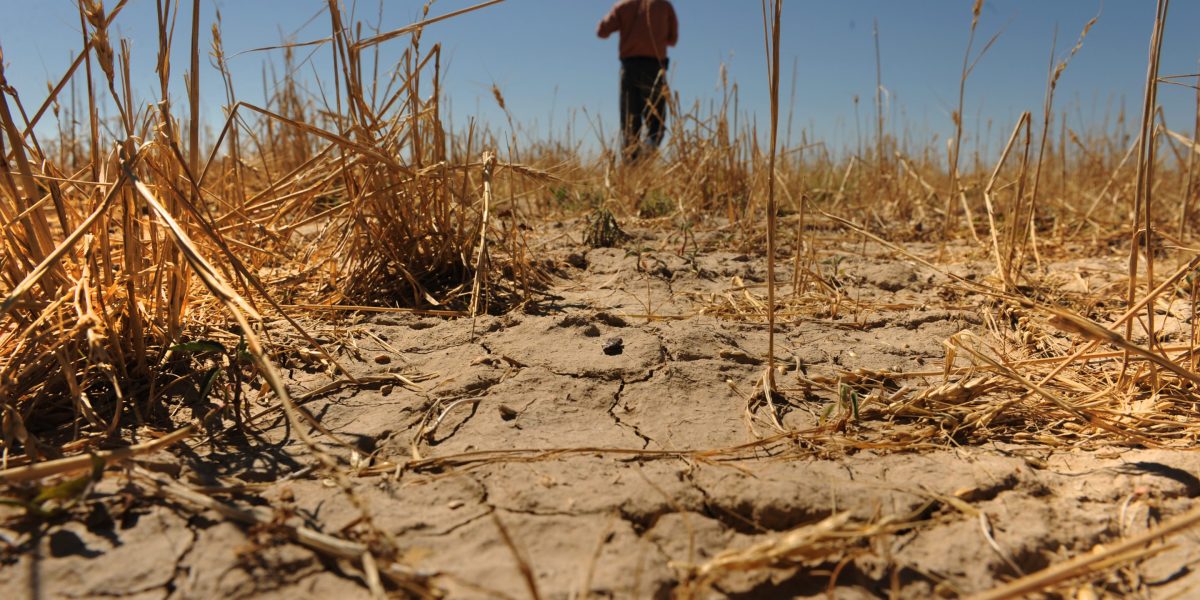
El Niño is back. NOAA confirmed last week that an El Niño event has officially formed over the Pacific Ocean, and early forecasts suggest it could be a powerful one — with consequences that reach far beyond the weather map and straight into your wallet.
The timing couldn't be worse. The global economy is still processing the inflationary shock from the Iran conflict and the Strait of Hormuz disruption. Oil prices hit $140 a barrel at their peak. Now, just as energy costs are beginning to ease on hopes of a peace deal, a climate pattern with a track record of trillions in economic damage is forming over the Pacific. The question isn't whether El Niño will affect the economy. The question is how badly.
## The Numbers Are Staggering
A 2023 study published in Science analyzed two particularly strong El Niño events — 1982 and 1997 — and found that each caused global income losses of $4.1 trillion and $5.7 trillion, respectively. Those aren't typos. The cumulative effects of El Niño events over the 21st century could add up to $84 trillion in economic losses, according to the same research.
The mechanism is straightforward even if the ripple effects are complex: warmer Pacific waters shift global weather patterns, causing droughts in some regions and flooding in others. Crops fail. Supply chains break. Shipping lanes dry up. Commodity prices spike. Insurance claims mount. And the costs cascade through every layer of the economy until they reach the grocery store shelf, the gas pump, and the insurance premium.
NOAA's latest forecast puts a 63% probability on sea surface temperatures surpassing 2.0°C above average in the Pacific — the threshold for a "very strong" El Niño. The World Meteorological Organization projects an event that will be "at least moderate — and possibly strong," comparable to past El Niños that caused significant global warming alongside their economic damage.
## Where the Damage Hits Hardest
**Agriculture and food prices.** This is ground zero. Wheat, corn, and rice — staple crops grown disproportionately in El Niño-vulnerable regions — are all projected to see price increases throughout the cycle, according to a European Commission forecast published Monday. Fitch, the ratings agency, warned that "sustained shortages could amplify risks to globally traded food commodity prices posed by an El Niño phenomenon, potentially affecting inflation prospects even in highly rated sovereigns." Translation: even wealthy countries with strong credit ratings will feel this at the checkout counter.
The problem compounds with the Iran conflict. Fertilizer prices, already elevated from the Middle East disruption, could rise further as El Niño strains agricultural production. Higher input costs plus lower output equals a double squeeze on food prices.
**Shipping and trade.** El Niño has a history of choking critical shipping lanes. During the 2023 El Niño, a prolonged drought in Central America brought Panama Canal water levels to historic lows, forcing operators to cut daily transits from 36 ships to 24. Vessels queued for days. Shipping costs surged. The same pattern could repeat — or worse, if the 2026 event is as strong as forecasts suggest.
**Insurance and infrastructure.** Extreme weather events — hurricanes, floods, wildfires — drive up insurance claims and payouts. Those costs get passed to policyholders through higher premiums, and to taxpayers through federal disaster relief. The National Oceanic and Atmospheric Administration has already recorded above-average Atlantic hurricane activity this season, a pattern consistent with El Niño's influence on storm tracks.
**Emerging markets.** Fitch's analysis notes that the impact will be most severe in poorer countries that rely heavily on agriculture. But the inflationary effects won't stay contained. Commodity price spikes in global markets hit everyone, and supply chain disruptions have a way of turning local crop failures into global food inflation.
## The Double Shock: El Niño Meets the Iran Aftermath
What makes 2026 uniquely challenging is the collision of two economic shocks. The Iran conflict has already disrupted energy markets, pushed up fertilizer prices, and strained shipping routes through the Strait of Hormuz. El Niño is now poised to add agricultural disruption, further shipping constraints, and inflationary pressure on top of an already fragile recovery.
Robert Muggah, a political scientist who has advised multiple governments on security issues, put it bluntly in a World Economic Forum post: "El Niño is often treated merely as a weather story, but in 2026, that risks complacency. The latest outlook should be seen as an early warning to governments, companies and aid agencies to prepare for what could be a major systemic shock."
He's right. The markets celebrated the Iran peace deal, sending oil prices down and stocks up. But El Niño doesn't care about peace deals. The climate is already loading the next economic cannon, and most businesses are looking the other way.
## What This Means For You
**If you're a consumer:** Start budgeting for higher food prices this fall and winter. El Niño's agricultural effects typically peak 6-9 months after formation, meaning the worst price pressure could hit during the holiday season. Stock up on shelf-stable staples now, before supply chain anxiety drives panic buying. Fresh produce from El Niño-affected regions (Southeast Asia, South America, East Africa) will see the biggest price swings.
**If you're an investor:** Agricultural commodities (wheat, corn, soy) are the direct play, but the ripple effects matter too. Companies in the fertilizer, shipping, and insurance sectors will see material impacts — both positive and negative. Homebuilders in hurricane-prone regions face headwinds. Insurance stocks could see volatility depending on storm season severity. And any business with Asia-Pacific supply chain exposure should be stress-testing its logistics for Panama Canal and Strait of Hormuz disruptions.
**If you're a business owner:** Review your supply chain resilience now, not in October when the effects start compounding. Identify alternative sourcing for commodities that could be affected by drought or flooding. Consider locking in pricing on key inputs. And if you're in agriculture, food processing, or any weather-sensitive industry, the time to update your scenario planning is before the forecasts become reality.
El Niño is not a surprise event — it's a forecast with a probability attached. The 63% chance of a "very strong" event means there's a 37% chance it won't be that bad. But with $4-6 trillion in potential losses from past strong El Niños, even a moderate event carries enough economic weight to reshape markets. The smart move isn't to bet on the best case. It's to prepare for the most likely one.
Finance & Markets Editor
Originally sourced from Fortune
Related Stories
Young Voters Squeezed by Economy, Distrust in Political System: Poll
A new Harvard Youth Poll paints a sobering picture of the economic and political landscape facing yo...
World shares are mixed and oil prices jump more than 3% after the UAE says it will exit OPEC
World shares are mixed following a retreat on Wall Street, and oil prices gained on Iran war uncerta...
World Bank warns the 2020s are becoming a \'lost decade\' for the global economy - \'barring a miracle\'
Global growth is now projected to slow to just\u00a02.5% in 2026, the weakest pace outside of outrig...