Why SpaceX is rocketing toward largest IPO in stock market history
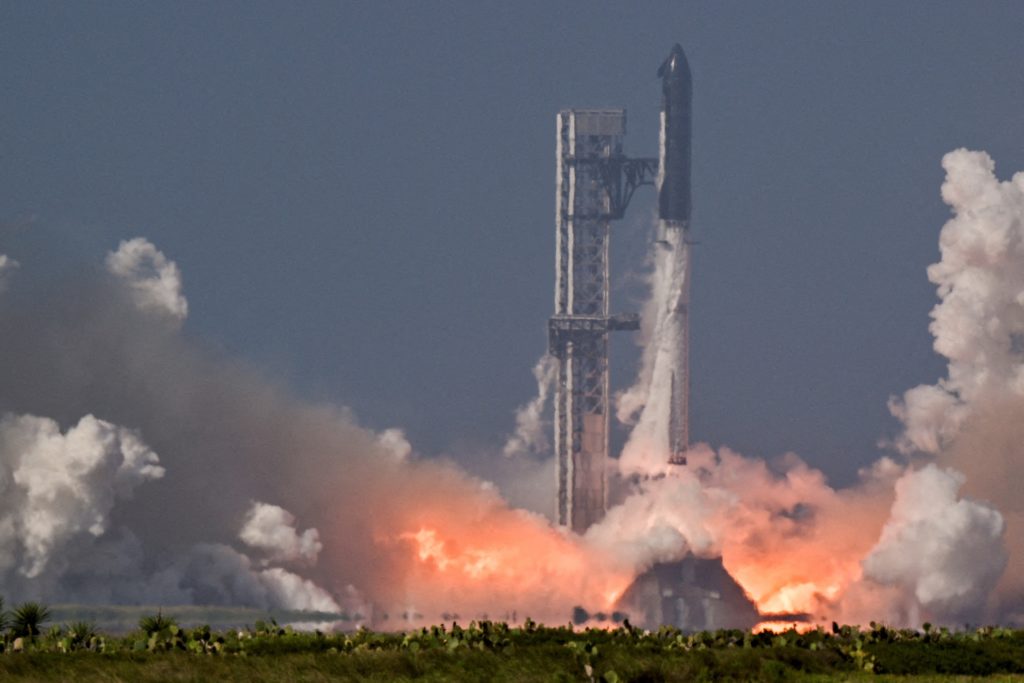
SpaceX goes public Friday in what is expected to be the largest initial public offering in stock market history, and the number at the center of the story — $1.7 trillion in valuation — tells you everything about where AI investment is right now and where the risks are heading.
The company is selling more than 555 million shares at $135 each, raising roughly $75 billion. Individual investors alone have already requested more than $70 billion worth of shares. Nasdaq and major index funds will allow trading within three weeks, far faster than the typical process for new listings.
The enthusiasm is understandable. SpaceX isn't just a rocket company anymore. The Starlink satellite internet business is generating real revenue. The company has secured billions in government contracts. And the xAI compute business absorbed in February gives the company a direct stake in the AI infrastructure race that has defined tech investing for two years.
But the numbers underneath the $1.7 trillion valuation should give any investor pause.
What You're Actually Buying
SpaceX generated about $18 billion in revenue last year and lost about $4.2 billion from operations. Let that sink in: a company that is losing over $4 billion annually is being valued at $1.7 trillion. That's roughly 94 times revenue and negative earnings — a multiple that makes even the most speculative tech companies of the dot-com era look conservative.
As Ron Insana, MS Now senior business analyst, told PBS: investors "are certainly buying the vision. They are not buying the company as it exists today." The bet is that SpaceX can grow into its valuation the way Microsoft, Alphabet, and Nvidia did over decades — but those companies had years of profitability before reaching comparable valuations. SpaceX is being priced as if that profitability is already guaranteed.
The xAI Factor
The xAI compute business, absorbed into SpaceX in February, is a critical part of the bull case. AI infrastructure is the hottest investment thesis in the world right now, and SpaceX effectively bundles space launch capability, satellite internet, and AI compute into a single offering. That's a powerful narrative.
But it collides directly with the concern Citadel Securities raised just this morning: that enterprise AI spending is hitting a cost ceiling. Microsoft cancelled Claude Code for 5,000 employees over token costs. Uber burned through its 2026 AI budget in four months. Oracle's stock crashed 11% after disclosing a $40 billion capital raise for AI infrastructure.
If AI spending is hitting a wall, then a significant portion of SpaceX's $1.7 trillion valuation is built on a growth assumption that may not hold. The company that absorbed xAI did so on the premise that demand for AI compute will compound indefinitely. If it doesn't, the math on the IPO gets uncomfortable fast.
The Historical Warning
Insana pointed to research from Truist's chief investment officer that should make every retail investor cautious: from the top price of hot IPOs like Meta and Alibaba, stocks were down an average of 55 percent one year later.
That's not a prediction that SpaceX will follow the same pattern. But it's a reminder that the most hyped IPOs of their eras have a history of disappointing investors who buy at the peak of enthusiasm. The companies that survived and thrived — like Amazon after its 1997 IPO — did so over many years and through many periods where early investors were underwater.
SpaceX may follow that trajectory. It may also be different because of its unique market position. But the historical pattern suggests that investors who get shares at $135 and see the stock pop to $165 on day one would be wise to remember that early profits in hot IPOs often evaporate.
The Debt Problem Nobody Is Discussing
One of the underappreciated risks in the SpaceX IPO and the broader AI investment cycle is debt. As Insana noted, these companies aren't just selling equity — they're also using significant amounts of debt to fund their build-outs. SpaceX's capital requirements for Starlink expansion, Starship development, and AI compute infrastructure are enormous, and the $75 billion being raised in the IPO may not be enough.
If the companies don't meet their revenue and profit expectations, the debt becomes a problem. Servicing billions in debt while losing $4 billion a year from operations is a combination that has ended badly for many companies with less glamorous narratives.
The $800 Billion Question
This year alone, roughly $800 billion will be spent on data centers and AI infrastructure. Some estimates project that reaching $1 trillion next year. That's more capital than was invested in building the U.S. railroad system in the 1870s, adjusted for inflation.
SpaceX's IPO is the clearest expression yet of the bet that this spending will pay off. If it does, the $1.7 trillion valuation will look cheap in hindsight. If it doesn't, the correction won't just hit SpaceX — it will hit every company in the AI supply chain, every fund that holds them, and every retirement account that's been riding the sector's gains for two years.
What This Means For You
If you're considering buying SpaceX shares, understand what you're getting. You're buying a vision of space internet, AI compute, and reusable rockets — not a company that currently generates profits. The $135 IPO price may look like a bargain if the vision materializes, and a very expensive lesson if it doesn't.
If you already own broad index funds, you'll likely own SpaceX within a few weeks whether you want to or not. Nasdaq and major index funds are fast-tracking its inclusion, which means your diversified portfolio will automatically have exposure. That's fine as long as you understand that a significant portion of the tech sector's growth assumptions now depend on a company that's currently losing $4 billion a year.
For everyone else, the SpaceX IPO is a barometer for the AI investment cycle. If it succeeds — if the stock holds and grows — it validates the thesis that enormous capital requirements are justified by future returns. If it stumbles, it's the signal that the cost ceiling Citadel warned about has arrived, and the entire AI trade needs to be re-evaluated. Watch the first week of trading. It will tell you more about the next year of markets than any analyst report.
Finance & Markets Editor
Originally sourced from PBS News
Related Stories
Young Voters Squeezed by Economy, Distrust in Political System: Poll
A new Harvard Youth Poll paints a sobering picture of the economic and political landscape facing yo...
World shares are mixed and oil prices jump more than 3% after the UAE says it will exit OPEC
World shares are mixed following a retreat on Wall Street, and oil prices gained on Iran war uncerta...
Will the Economy Cost Republicans the Midterms? New Poll Shows Troubling Signs
A new Fox News poll released this week delivers a sobering message for Republicans heading into the ...