Hantavirus Cruise Ship Crisis Deepens: 3 Dead, New Case in Switzerland, and a Political Standoff Over Docking
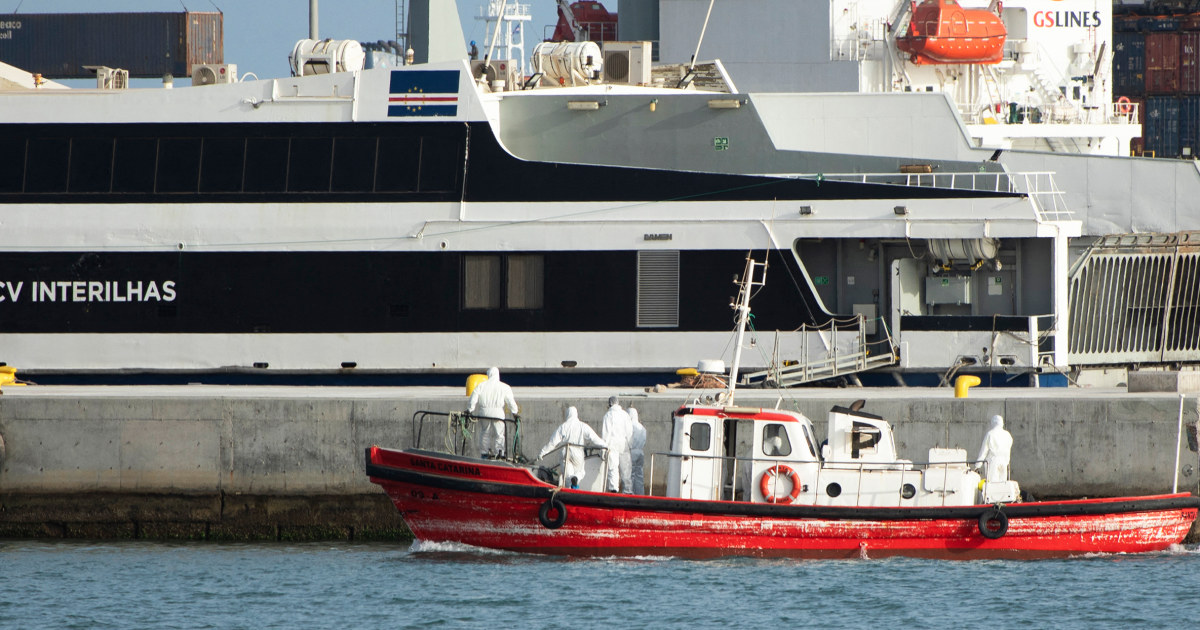
A luxury cruise ship has become a floating quarantine zone in the Atlantic Ocean, as a deadly hantavirus outbreak aboard the Hondius continues to spread while political authorities argue over whether to allow the vessel to dock. Three passengers are dead, eight cases have been identified, and three more passengers were medically evacuated Wednesday morning — two with acute symptoms and one who may be infected.
The World Health Organization confirmed Wednesday that the outbreak involves the Andes strain of hantavirus, which is transmissible between people — a critical distinction from the more common hantavirus strains found in North America that spread only from rodents to humans. The Andes strain, endemic to parts of Argentina, can pass from person to person through close contact such as sharing a bed or food, according to WHO epidemiologist Maria Van Kerkhove.
The ship's ordeal began after it departed Ushuaia, southern Argentina, on April 1, stopping at multiple remote locations including mainland Antarctica, Tristan da Cunha, and St. Helena. The three passengers who died — a Dutch couple and a German national — represent an unusually high fatality rate for hantavirus, which typically kills 35-50% of those infected with the Andes strain but is relatively rare outside South America.
The Hondius now sits marooned off the coast of Cape Verde in West Africa, where it has been since at least Monday after local authorities refused docking permission. Spain's national government in Madrid had said the Canary Islands would accept the ship, which would begin a three-to-four-day journey there. But the archipelago's regional government opposed the move.
Fernando Clavijo, the Canary Islands' regional leader, told radio station COPE that the decision to accept the ship "is not based on any technical criteria, nor is there sufficient information to reassure the public or guarantee their safety." He has requested an urgent meeting with Spanish Prime Minister Pedro Sanchez, though the national government retains the authority to overrule regional authorities on this decision.
The standoff mirrors dynamics seen during the early days of COVID-19, when cruise ships became symbols of containment failures and no-port nations refused docking. The difference here is scale — the Hondius has approximately 150 people on board, not thousands — but the political calculus is similar: local leaders face intense public pressure to keep perceived biothreats at arm's length, regardless of what public health assessments might recommend.
In Switzerland, a man who had traveled on the ship is being treated for hantavirus in Zurich. The Swiss government confirmed the case but said there was no threat to the wider population. A British man remains in intensive care in South Africa. The WHO said the Swiss patient went to the hospital after responding to an email from the cruise operator.
One medic remains aboard the Hondius, and two infectious disease specialists from the Netherlands were due to board the ship and stay on. The three passengers evacuated Wednesday were transferred to specialized hospitals in Europe through coordination with the Dutch foreign ministry.
Hantavirus has no specific treatment or cure. The Andes strain's person-to-person transmissibility makes it uniquely dangerous in confined settings like ships and hospitals. The WHO has repeatedly stressed that the public threat level remains low, citing the requirement for close contact for transmission — but that reassurance does little for the 150 people still aboard a ship that no country wants to welcome.
What This Means For You: If you're booked on a cruise to South America or Antarctica, review your travel insurance policy carefully — most standard policies do not cover pandemic or epidemic scenarios, and the legal definitions of those terms can be narrowly written. If you have upcoming cruise travel, monitor the WHO and CDC advisories for updated guidance on hantavirus risk. The Andes strain remains rare outside its endemic region, but this outbreak demonstrates how quickly a localized pathogen can become an international incident when it surfaces in a mobile population. For the general public, this situation is a reminder that global health security depends on political cooperation as much as medical capability — and that cooperation is far from guaranteed when fear enters the equation.
Editorial Team
Originally sourced from TODAY / WHO
Related Stories
Juvenile Shot in Vehicle Incident in Randolph County Highlights Gun Safety Concerns
COLUMBIA, Mo. (KMIZ) A juvenile had non-life-threatening injuries after they were accidentally shot ...
Your Android Camera Can Do Much More Than Take Photos — Here\'s What You\'re Missing
With the right apps, your Android camera becomes a health monitor, food scanner, accessibility tool,...
Young country music star's scary condition can kill her instantly: 'You're just gone'
The 28-year-old has been open about her health diagnosis....