Tulsi Gabbard resigns, citing husband's health
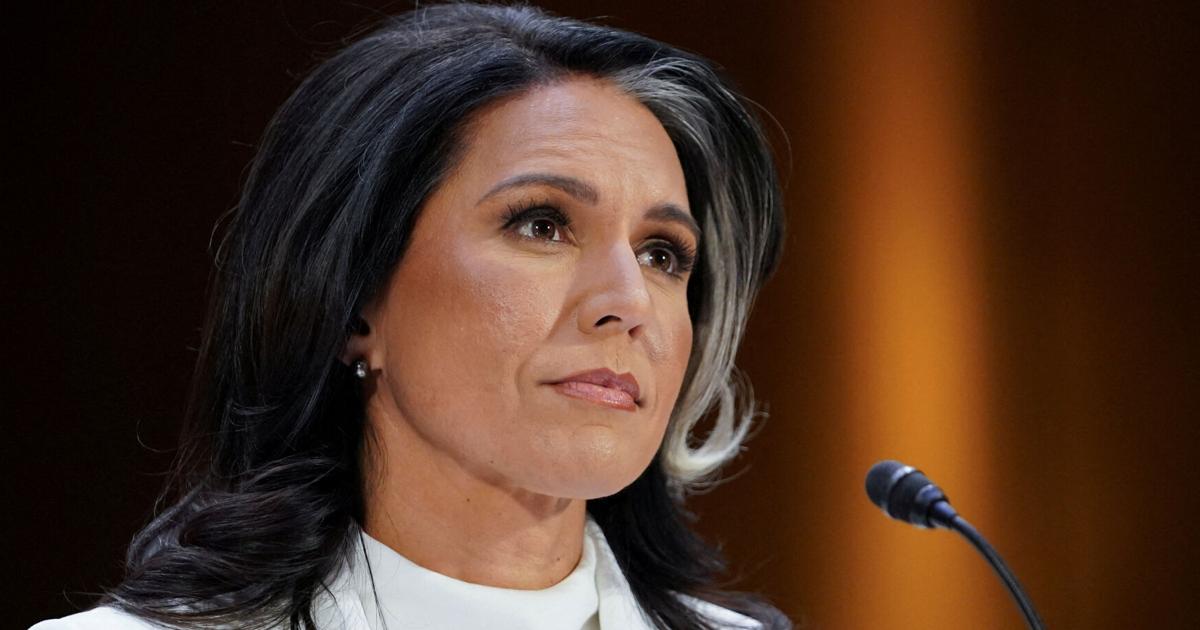
Tulsi Gabbard is resigning as Director of National Intelligence, citing her husband's health, according to multiple reports confirmed by Fox News Digital on Friday. The departure removes one of the most polarizing figures in the Trump administration's intelligence apparatus and creates a leadership vacuum at the top of the U.S. intelligence community at a moment of significant global instability.
Gabbard's resignation letter, which Fox News described as citing her husband's health battle, brings an abrupt end to a tenure that began with deep skepticism from the intelligence community and never fully won its trust. A former Democratic congresswoman from Hawaii who ran for president in 2020 on an anti-interventionist platform, Gabbard was Trump's surprise pick to lead the Office of the Director of National Intelligence — the umbrella agency that coordinates the work of 18 intelligence organizations and a $70 billion annual budget.
Her appointment was controversial from the start. Former intelligence officials raised concerns about her lack of intelligence experience, her past meetings with Syrian President Bashar al-Assad, and her stated skepticism of U.S. military interventions. During her confirmation hearings, she softened many of her previous positions, but the underlying tensions never fully resolved.
As DNI, Gabbard oversaw a period of significant intelligence challenges: the Iran conflict and its impact on global oil markets, rising cyber threats from China and Russia, and the ongoing war in Ukraine. Her approach to these challenges was often at odds with the career intelligence professionals she was supposed to lead. She pushed for reduced intelligence sharing with allies, questioned established assessments about Russian election interference, and advocated for a more restrained U.S. footprint in global hotspots.
Her supporters saw a reformer willing to challenge groupthink in an intelligence community that had repeatedly made costly errors. Her critics saw an ideologue with neither the experience nor the temperament for the role, who weakened alliances and undermined morale.
The resignation creates an immediate succession question. The Deputy DNI, typically the official who would step in during a transition, is a position that has seen significant turnover in the Trump administration. The intelligence community is also in the middle of several critical operations, including ongoing assessments of Iran's nuclear capabilities and the fallout from a Chinese espionage case that compromised several intelligence assets.
Gabbard's personal reasons for departing — her husband's health — are unambiguous and not in question. But the timing is nonetheless significant. The U.S. is navigating an active military conflict with Iran, rising tensions with China, and a domestic economy under strain. The intelligence community needs stable leadership, and for the second time in this administration, it is losing its chief during a crisis period.
The White House has not yet named a replacement. Potential candidates include several current intelligence officials and at least one former Democratic lawmaker who has been mentioned in discussions about the role, according to people familiar with the matter.
Gabbard's legacy as DNI will be debated for years. She entered promising to shake up an intelligence community that many Americans had lost faith in after Iraq, domestic surveillance revelations, and repeated intelligence failures. She leaves with that community arguably more polarized and less cohesive than when she arrived. Whether that is a feature of reform or a bug of inexperience is a question that will shape how her successor approaches the job.
**What This Means For You:** The resignation of the Director of National Intelligence is not normally something that affects your daily life, but this one might. The U.S. intelligence community is in the middle of tracking multiple active threats — Iran, China, cyber operations — and leadership transitions create gaps that adversaries exploit. If you work in national security, defense, or intelligence-adjacent industries, expect a period of policy uncertainty and potentially delayed decision-making. For the general public, this is another data point in a pattern of instability at the top of key federal agencies during a period when stability matters most. Watch who replaces Gabbard — a career intelligence professional would signal continuity, while another political appointee would signal more disruption.
Editorial Team
Originally sourced from St. Louis Post-Dispatch
Related Stories
Juvenile Shot in Vehicle Incident in Randolph County Highlights Gun Safety Concerns
COLUMBIA, Mo. (KMIZ) A juvenile had non-life-threatening injuries after they were accidentally shot ...
Your Android Camera Can Do Much More Than Take Photos — Here\'s What You\'re Missing
With the right apps, your Android camera becomes a health monitor, food scanner, accessibility tool,...
Young country music star's scary condition can kill her instantly: 'You're just gone'
The 28-year-old has been open about her health diagnosis....