U.S. Ships Experimental Ebola Treatment to Congo as Outbreak Becomes Third-Largest on Record
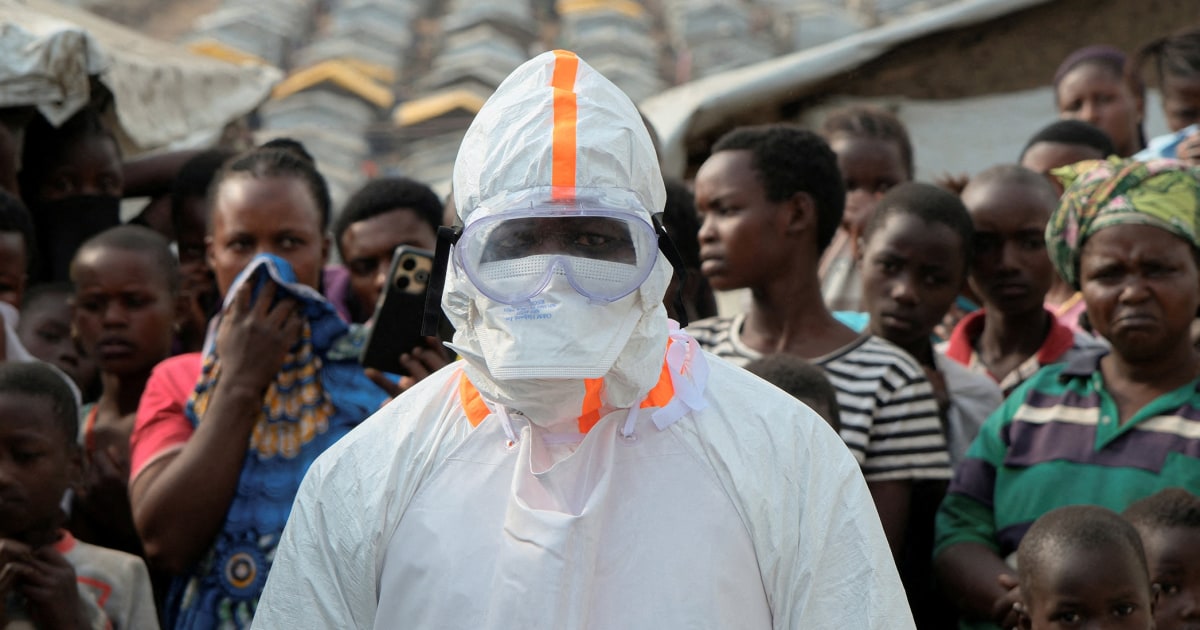
The United States has reversed its position on experimental Ebola treatments, announcing that it will provide doses of Mapp Biopharmaceutical's antibody drug MBP134 for clinical trials in the Democratic Republic of Congo — a significant shift from its earlier stance of reserving the medication for Americans deemed at high risk of exposure.
The policy change comes as the Bundibugyo strain Ebola outbreak in Congo has swelled to more than 1,000 confirmed cases and over 250 deaths, making it the third-largest Ebola outbreak on record. A handful of cases have also been reported in neighboring Uganda, and on Wednesday, France confirmed the first case of the virus to reach Europe since the current outbreak began.
A Department of Health and Human Services spokesperson confirmed the shipment but declined to specify the number of doses being provided, saying only that the drug is being made available for compassionate use in Congo and to advance a clinical trial in the outbreak zone. The trial data could inform future regulatory review and potential U.S. approval, the spokesperson added.
The shift is notable not just for its public health implications but for what it reveals about the evolving U.S. approach to the crisis. The Trump administration had previously drawn criticism for restricting access to the experimental treatment to American citizens only, while simultaneously dismantling the U.S. Agency for International Development and slashing foreign aid to the region. That combination — hoarding treatments while cutting the infrastructure needed to deliver them — struck many global health experts as both morally untenable and strategically short-sighted.
The current position, while still modest in scale, represents an acknowledgment that containment cannot be achieved through national isolation alone. The CDC has warned that without a robust international response, the outbreak could become the worst in history. Providing treatments for clinical trials in the affected region is a necessary step toward generating the safety and efficacy data that regulators require — data that does not exist for the Bundibugyo strain.
And that is the core challenge. Unlike the Zaire ebolavirus, which caused the devastating 2014-2016 West Africa epidemic and now has an approved vaccine (Ervebo) and monoclonal antibody treatments, the Bundibugyo strain has no approved vaccines or therapies. The existing tools in the global health arsenal were designed for a different enemy. This outbreak requires new ones, and it requires them fast.
The clinical trial landscape is beginning to take shape. The Mapp drug will be tested on its own as a treatment for Bundibugyo and alongside Gilead Sciences' antiviral remdesivir — the same drug widely used during the COVID-19 pandemic, now being repurposed for Ebola. The Mapp trial is sponsored by the World Health Organization and led by the University of Oxford in partnership with the Congolese and Ugandan governments.
A second trial will test Gilead's obeldesivir as a preventive option, likely beginning this month. That trial will be led by Congo, Uganda, and the Africa Centers for Disease Control and Prevention, co-sponsored by Congo's National Institute for Biomedical Research and France's ANRS Emerging Infectious Diseases agency.
Vaccine development is further behind. Four candidates have received backing from the Coalition for Epidemic Preparedness Innovations, with the most advanced being an Oxford-Serum Institute of India candidate and an mRNA-based vaccine from Moderna. Phase 1 trials could begin in July, likely in the United Kingdom and possibly Uganda, according to CEPI CEO Richard Hatchett. But manufacturing, safety testing, and the logistics of deploying vaccines in an active conflict zone mean widespread availability is months away at best.
Those logistics are daunting. Eastern Congo's Ituri Province, the epicenter of the outbreak, has been destabilized by armed conflict for decades. Health workers have faced direct attacks on treatment facilities — at least three have been targeted in the past month alone. Over 5 million people remain internally displaced. Trust in medical responders is fragile, supply chains are unreliable, and the combination of population displacement and insecurity creates conditions that the virus exploits with devastating efficiency.
The WHO has acknowledged the challenge. "Running clinical trials in a conflict-hit part of the world, where disease testing and contact tracing are challenging, mistrust and attacks on health workers widespread, and supply chains disrupted, will be difficult," the agency said in a statement. But the alternative — waiting for the outbreak to burn itself out — is both inhumane and epidemiologically reckless.
There is also the question of what happens after the trials. The WHO has emphasized that patients in affected countries must be able to access proven treatments, not just serve as subjects in someone else's research protocol. Ensuring access after trial completion — particularly for treatments that may be expensive to manufacture and distribute — will require sustained international funding and political will, both of which have been in short supply.
The U.S. contribution, while welcome, remains a fraction of what is needed. The government has pledged hundreds of millions of dollars to the Ebola response, but has also been building a controversial quarantine center in Kenya specifically for American citizens — a facility that critics argue prioritizes American evacuation over Congolese containment.
What This Means For You: The Bundibugyo Ebola outbreak is no longer contained to central Africa. France has confirmed a case, and without effective treatments and vaccines — which currently do not exist for this strain — further international spread is possible. The U.S. policy shift from hoarding experimental drugs to sharing them for clinical trials is a step in the right direction, but it is a reactive measure, not a proactive one. The real lesson is that global health security requires investment before a crisis, not during one. The dismantling of USAID and cuts to foreign health programs weakened the very systems that could have contained this outbreak earlier. If you care about whether a rare hemorrhagic fever reaches your community, you should care about whether your government funds the surveillance, research, and response infrastructure that keeps these diseases from spreading in the first place. Prevention is cheaper than panic — and infinitely more effective.
Editorial Team
Originally sourced from NBC News
Related Stories
Juvenile Shot in Vehicle Incident in Randolph County Highlights Gun Safety Concerns
COLUMBIA, Mo. (KMIZ) A juvenile had non-life-threatening injuries after they were accidentally shot ...
Your Android Camera Can Do Much More Than Take Photos — Here\'s What You\'re Missing
With the right apps, your Android camera becomes a health monitor, food scanner, accessibility tool,...
Young country music star\'s scary condition can kill her instantly: \'You\'re just gone\'
The 28-year-old has been open about her health diagnosis....