Why Existing Ebola Vaccines Won’t Stop the Current Outbreak — And What’s Coming Next
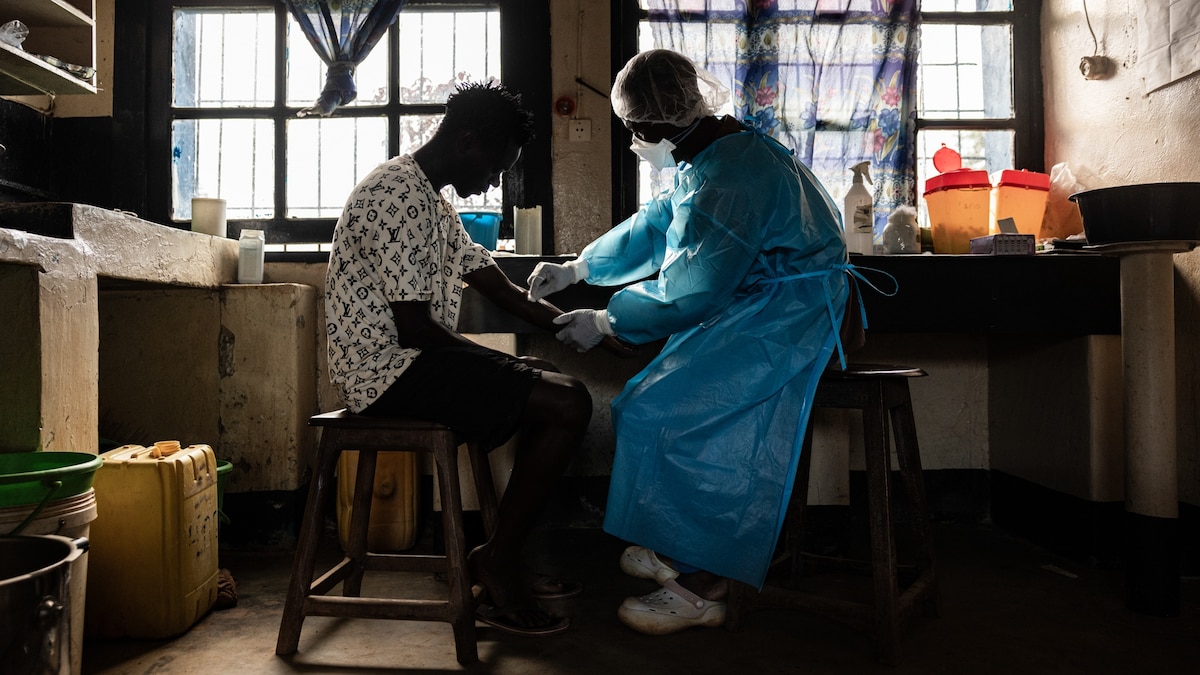
The Democratic Republic of Congo is facing a catastrophic Ebola outbreak, and the world's best tool for stopping it — the Ervebo vaccine — doesn't work against this strain. It's a devastating gap in global health preparedness that scientists are racing to close, but the timeline may not be fast enough for the people on the ground.
## A Brief History of Ebola Vaccines
The first Ebola vaccine wasn't developed in response to an outbreak. It was developed to stop the Soviet Union.
In the 1990s, the U.S. Army Medical Research Institute of Infectious Diseases was tasked with finding countermeasures against potential biological weapons. Virologist Thomas Geisbert and his Canadian collaborator Heinz Feldmann were studying the outer coatings of Ebola viruses when Feldmann made an accidental breakthrough: he modified a weakened version of vesicular stomatitis virus (VSV) — which causes mouth and hoof blisters in livestock — to display part of Ebola's outer coat instead of its own. The experiment was supposed to prove the coating's deadliness. Instead, none of the test mice got sick. And when those same mice were later exposed to regular Ebola viruses, they stayed healthy.
When Geisbert — now at the University of Texas Medical Branch in Galveston — and a multinational team replicated those findings in primates a few years later, they were "bouncing off the walls." That science laid the groundwork for Ervebo, the Ebola vaccine developed in response to the 2014 West African outbreak that killed more than 11,000 people over roughly two years. It has helped curb transmission in multiple outbreaks since.
## The Problem: Different Strain, Same Virus Family
Here's the critical gap: Ervebo was designed to fight the Zaire species of Ebola virus. The current outbreak in the DRC is caused by the Bundibugyo species — a different, far more rare variant. The existing VSV-based vaccine doesn't reliably prevent transmission of Bundibugyo, and neither does the less commonly used alternative vaccine.
This isn't a minor difference. Ebola viruses belong to the Filoviridae family, and different species within that family have distinct outer protein coatings — the very coatings that vaccines train the immune system to recognize. A vaccine trained on Zaire's specific protein structure may not recognize Bundibugyo's different shape well enough to mount an effective immune response.
Think of it like this: If your immune system is a security guard trained to spot a specific uniform, and the intruder shows up wearing a different outfit, the guard may not recognize the threat in time.
## The Race for a New Vaccine
Officials have scrambled to fast-track new vaccine prototypes specifically targeting the Bundibugyo species. A few leading candidates have emerged from the same VSV platform that made Ervebo possible — essentially swapping out the Zaire protein coating for the Bundibugyo one.
The science is sound. The platform is proven. But developing, testing, and deploying a vaccine in the middle of an active outbreak in a conflict zone is extraordinarily difficult. The DRC's eastern provinces, where this outbreak is centered, have been plagued by armed conflict for decades. Health workers face violence, community resistance, and near-impossible logistics. Roads are poor, refrigeration is unreliable, and trust in outside interventions is low.
Even if a candidate vaccine proves effective in early trials, manufacturing at scale, distributing in a conflict zone, and building community acceptance all take time that infected people don't have.
## The Bigger Picture: Pathogen Preparedness Has Gaps
This outbreak exposes a fundamental weakness in global health preparedness: we develop vaccines for the threats we've already seen, not the ones that are coming. Ervebo works brilliantly against Zaire Ebola, which has caused the largest and most deadly outbreaks. But nature doesn't limit itself to the variants we've prepared for.
The same gap exists across multiple pathogen families. We have flu vaccines that need updating every year because influenza mutates so rapidly. COVID-19 vaccines required unprecedented speed to develop for a novel coronavirus. And now we're seeing that even within the Ebola family — where we thought we had a working solution — a species-level shift can render our best tool ineffective.
## What This Means For You
**Global health security affects everyone.** The DRC outbreak may seem remote, but in an interconnected world, a pathogen that evades our existing tools is a concern for every country with international travel connections.
**Vaccine development timelines are the bottleneck.** The mRNA technology accelerated during COVID has potential to speed up development for outbreaks like this, but it can't replace the clinical trial process. Supporting faster trial frameworks and pre-positioned manufacturing capacity is a policy choice that requires funding and political will.
**Ebola preparedness is chronically underfunded.** Between outbreaks, attention and funding fade. The WHO and other organizations have repeatedly called for sustained investment in outbreak preparedness rather than crisis-response spending. This outbreak is a case study in why that matters.
**Community trust is as important as vaccine science.** Even if a new vaccine is developed quickly, it won't help if communities in affected areas won't accept it. Decades of conflict and exploitation have eroded trust in eastern DRC. Rebuilding that trust requires sustained, culturally competent engagement — not just dropping in during a crisis.
**The next pandemic may not be the pathogen we expect.** Whether it's a novel coronavirus, a different Ebola species, or something entirely unexpected, our preparedness is only as strong as our ability to adapt quickly. The Bundibugyo outbreak is a reminder that having one solution doesn't mean having all solutions.
Editorial Team
Originally sourced from National Geographic
Related Stories
Juvenile Shot in Vehicle Incident in Randolph County Highlights Gun Safety Concerns
COLUMBIA, Mo. (KMIZ) A juvenile had non-life-threatening injuries after they were accidentally shot ...
Your Android Camera Can Do Much More Than Take Photos — Here\'s What You\'re Missing
With the right apps, your Android camera becomes a health monitor, food scanner, accessibility tool,...
Young country music star\'s scary condition can kill her instantly: \'You\'re just gone\'
The 28-year-old has been open about her health diagnosis....