Election live updates: Voters head to the polls in Kentucky, Georgia, Pennsylvania, and more in major primary contests
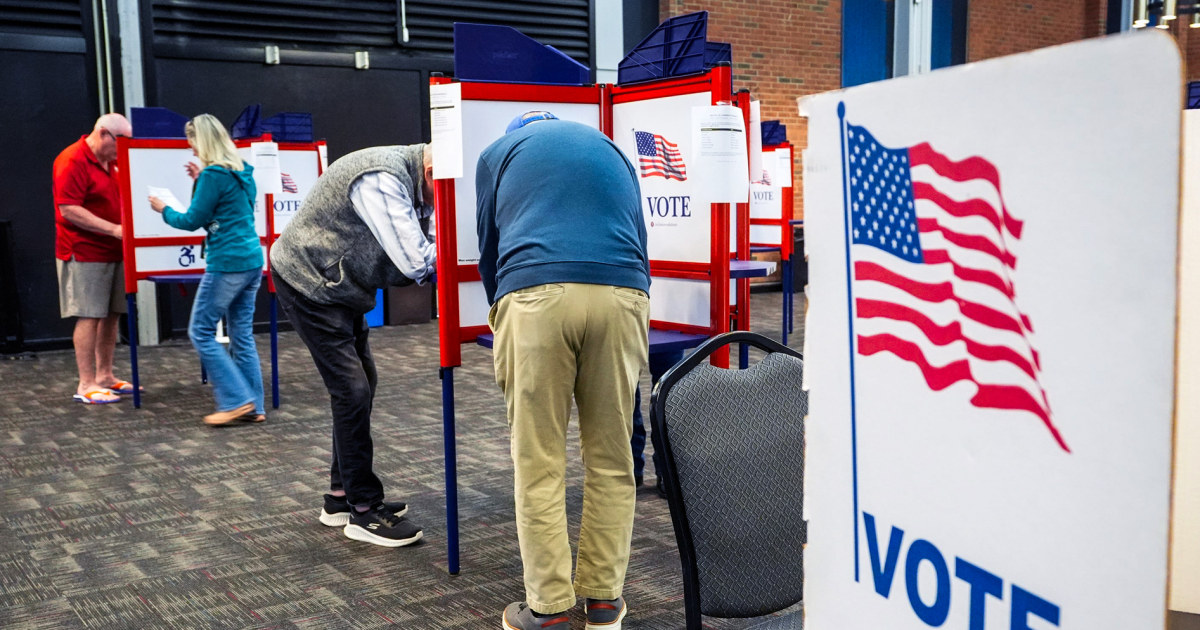
Voters across six states head to the polls Tuesday in the most consequential primary election day of 2026 so far — with Senate seats, governor's mansions, and control of the House hanging in the balance.
Kentucky, Alabama, Georgia, Idaho, Oregon, and Pennsylvania are all holding primaries that will shape the general election landscape in November. The results will test Donald Trump's enduring grip on the Republican Party, reveal whether Democrats can field competitive candidates in red states, and determine which races will decide the balance of power in Congress.
## What's at Stake
**The Senate map** is the biggest prize. Republicans are defending a narrow majority, and several seats are genuinely competitive. In Kentucky, the GOP primary features Trump-backed challengers trying to unseat Rep. Thomas Massie — one of the few Republicans who has openly defied Trump on spending votes. In Alabama, Trump endorsed Rep. Barry Moore in a crowded six-way GOP primary for the open Senate seat vacated by retiring Sen. Richard Shelby's successor.
**Governor's races** in Georgia and Oregon could reshape state politics for years. Georgia's governor's mansion has been a battleground since 2020, and the primary will determine whether Republicans nominate a candidate who can win a general election in an increasingly competitive state.
**The House** races in Pennsylvania are critical. Pennsylvania's delegation could determine which party controls the chamber in 2027, and the primaries will determine the quality of candidates who face off in November.
## The Trump Factor
Tuesday is another test of whether Trump's endorsement still moves votes. The track record has been mixed. In 2017, Trump's endorsed Senate candidate in Alabama — Luther Strange — lost the GOP primary to Roy Moore, who then lost the general election to Democrat Doug Jones in one of the biggest upsets in recent political history.
Trump held a tele-rally Monday night for three Kentucky Republicans, including the challenger to Massie. The effort to oust Massie is particularly significant because it signals whether dissent within the GOP carries a political cost. If Trump's candidate loses, it suggests the party's base is willing to tolerate independence from the former president. If Trump's candidate wins, it reinforces the message that loyalty is a prerequisite for Republican survival.
In Alabama, Trump endorsed Moore at a rally, calling him "in a different league" and touting his early support from 2015. But Alabama's runoff rules require a candidate to clear 50% to avoid a runoff — and with six candidates splitting the vote, a runoff is likely regardless of Trump's endorsement.
## The Democratic Side
Democrats have their own dynamics at play. In Georgia, the primary will determine whether the party fields a centrist or progressive candidate for governor — a decision that could determine whether the seat is competitive in November.
Pennsylvania's Democratic primaries feature several races where the progressive wing is challenging establishment candidates. The outcomes will signal whether the energy in the party belongs to the activist base or the institutional wing.
In Oregon, the governor's race is open and competitive, with multiple Democrats vying for a nomination in a state where the party dominates statewide politics but has faced surprising competitive races in recent cycles.
## Why These Primaries Matter Nationally
Primary elections don't just select candidates — they set the tone for the general election. A candidate who emerges from a bruising primary fight weakened and underfunded is less likely to win in November. A candidate who unites the party early has more time and resources for the general election.
The 2026 midterms will be a referendum on Trump's second term, the economy, the Iran war, and the direction of the country. The candidates selected Tuesday will be the faces of their parties in that referendum. Quality of candidates matters — possibly more than any other single factor in determining which party controls Congress in 2027.
For voters in these six states, Tuesday is the only day they get to choose who represents them. General elections offer a binary choice; primaries offer a real choice.
## What This Means For You
- **If you live in one of these six states:** Vote. Primary turnout is typically 20-30% of general election turnout, meaning a small number of motivated voters determines the choices available to everyone in November. - **If you're tracking the Senate:** Watch Kentucky and Alabama. The GOP candidates who emerge will determine whether these safe red states stay safe or become unexpected Democratic targets. - **For the economy:** The candidates who win these primaries will be voting on federal spending, tax policy, and regulatory decisions that affect your wallet. Congressional control determines whether tax cuts are extended, whether infrastructure spending continues, and whether the deficit keeps growing. - **For markets:** Political uncertainty is already elevated. Unexpected primary results — especially if Trump-endorsed candidates lose — could add volatility to an already nervous market. Watch the Kentucky Massie race as a bellwether for intra-GOP dynamics. - **For democracy itself:** These primaries are where the real selection happens. By November, most races are already decided by district lines. Tuesday is when voters have the most influence over who governs them.
Senior Political Correspondent
Originally sourced from NBC News
Related Stories
Woman, Her 5 Children Released From Longest ICE Detention of a Family Under Trump
A woman and her five children have been released from Immigration and Customs Enforcement custody af...
Wildfires Abound in US Southeast, Georgia Suffers Record Property Losses
Wildfires are tearing through the US Southeast at an alarming pace, with Georgia hit especially hard...
Why fighting federal-benefit fraud must top the Republican agenda
Expect the fight against fraud to dominate the Republican agenda in Congress and on the campaign tra...