FISA spy tool to lapse June 12 unless deal can get done
The clock is ticking on one of the most powerful surveillance tools in the U.S. government's arsenal. Section 702 of the Foreign Intelligence Surveillance Act, the legal authority that allows American intelligence agencies to collect electronic communications of non-U.S. persons located abroad, is set to expire on June 12 unless Congress can break a political logjam that has deepened along partisan lines.
The stakes could hardly be higher. Section 702 underpins a vast portion of the intelligence community's foreign surveillance operations, feeding critical information to counterterrorism teams, cyber defense units, and military commanders around the world. Intelligence officials have warned that allowing the authority to lapse even briefly would create dangerous blind spots at a moment of heightened global tension, from the Strait of Hormuz to the South China Sea.
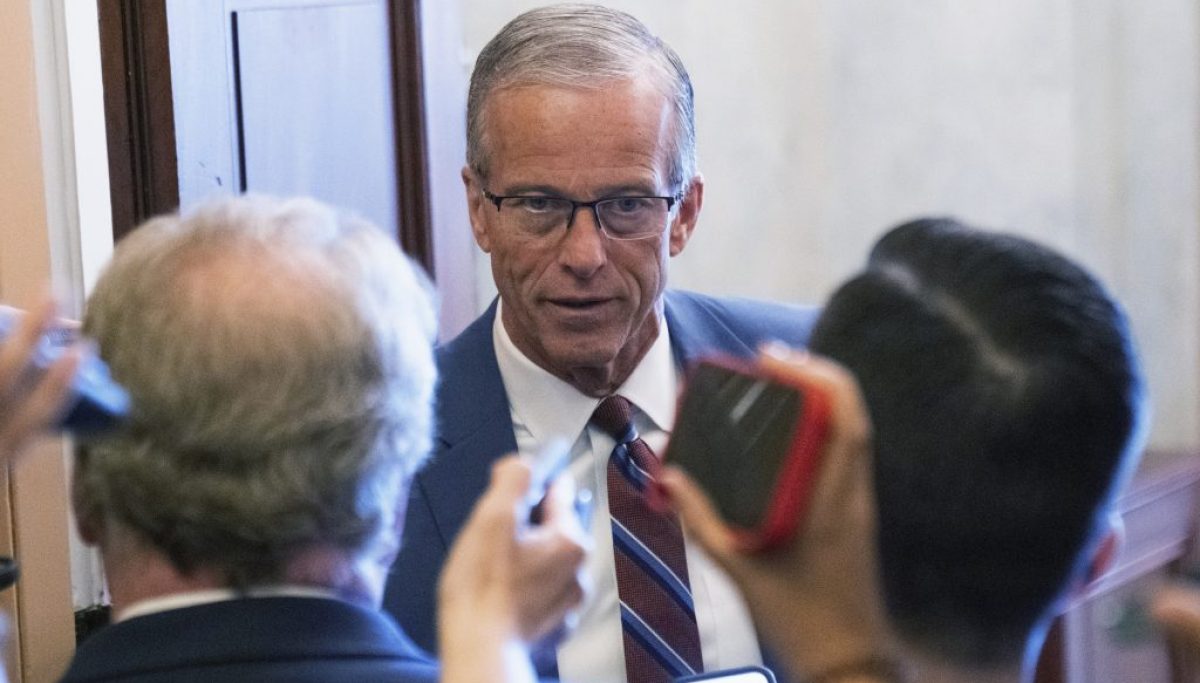
But the path to renewal has become tangled in a political fight that has little to do with surveillance itself. Senate Majority Leader John Thune acknowledged Friday that Republicans will need Democratic votes to overcome the 60-vote filibuster threshold, and Democrats are withholding their support over an unrelated dispute: President Trump's appointment of Bill Pulte as acting director of national intelligence. Democrats argue that Pulte, who also serves as director of the Federal Housing Finance Agency, has weaponized his position to make criminal referrals against Trump's political opponents over allegations of mortgage fraud. The result is a standoff where a critical national security tool is being held hostage to a personnel dispute.
This is not the first time Section 702 has faced an uncertain future. The authority was last reauthorized in April 2024, when Congress extended it for two years after a contentious debate that included reforms to limit the FBI's ability to query the database for information on Americans. Those reforms, which require the FBI to obtain a court order before searching for U.S. person identifiers in certain cases, were a hard-won concession from civil liberties advocates who had long argued that the program amounted to warrantless domestic surveillance. The current debate, however, is less about the substance of the program and more about political leverage, which makes it harder to predict how it will be resolved.
The irony is that both parties have historically supported Section 702 when their preferred president occupied the White House. The program was originally passed under George W. Bush, expanded under Barack Obama, and reauthorized under both Trump's first term and the Biden administration. What has changed is the willingness to use its expiration as a bargaining chip. Democrats who once championed the program as essential to national security are now comfortable letting it sunset if it means extracting concessions on the Pulte nomination. Republicans who expressed skepticism about surveillance overreach during the Obama years are now the ones sounding the alarm about the dangers of a lapse.
For ordinary Americans, the debate touches on fundamental questions about privacy and government power. Section 702 technically targets foreigners abroad, but the program inevitably collects the communications of Americans who are in contact with those foreign targets. The FBI's previous practice of searching this data without a warrant — known as "backdoor searches" — was a key driver of the 2024 reforms. Civil liberties groups, including the ACLU and the Electronic Frontier Foundation, have argued that even the reformed program still allows too much room for warrantless surveillance of Americans. They point out that the number of U.S. person queries has historically been underreported and that the reforms do not go far enough to protect Fourth Amendment rights.
On the other side, national security officials insist that Section 702 is indispensable. The program produces intelligence that cannot be obtained through other means, and its loss would degrade the government's ability to track terrorist plots, foreign cyber intrusions, and the activities of adversarial nations. In a letter to congressional leaders earlier this year, the directors of the CIA, NSA, and FBI all warned that a lapse would be "devastating to national security." They cited specific examples of 702-derived intelligence that had prevented attacks and identified foreign agents operating on U.S. soil.
The June 12 deadline leaves little room for maneuvering. If Congress fails to act, the authority lapses, and intelligence agencies would be forced to wind down collection programs that have been operational for nearly two decades. Even a short lapse would require significant resources to restart, and some intelligence partnerships with foreign agencies could be damaged by the uncertainty. The most likely outcome remains a short-term extension that kicks the problem past the midterm elections, but that requires both parties to find a face-saving way to compromise — something that has been in short supply in recent years.
What is clear is that the debate over Section 702 is no longer just about surveillance. It has become a proxy for broader fights over presidential power, congressional oversight, and the boundaries of executive authority. The intelligence community needs the authority. Civil liberties advocates want stronger protections. And politicians on both sides are calculating how much leverage they can extract before the clock runs out. The question is whether anyone will blink before June 12.
Senior Political Correspondent
Originally sourced from Washington Examiner
Related Stories
Woman, Her 5 Children Released From Longest ICE Detention of a Family Under Trump
A woman and her five children have been released from Immigration and Customs Enforcement custody af...
Wildfires Abound in US Southeast, Georgia Suffers Record Property Losses
Wildfires are tearing through the US Southeast at an alarming pace, with Georgia hit especially hard...
Why fighting federal-benefit fraud must top the Republican agenda
Expect the fight against fraud to dominate the Republican agenda in Congress and on the campaign tra...