Trump and Johnson Host Six Rival AI CEOs at the White House as the Safety Debate Boils Over
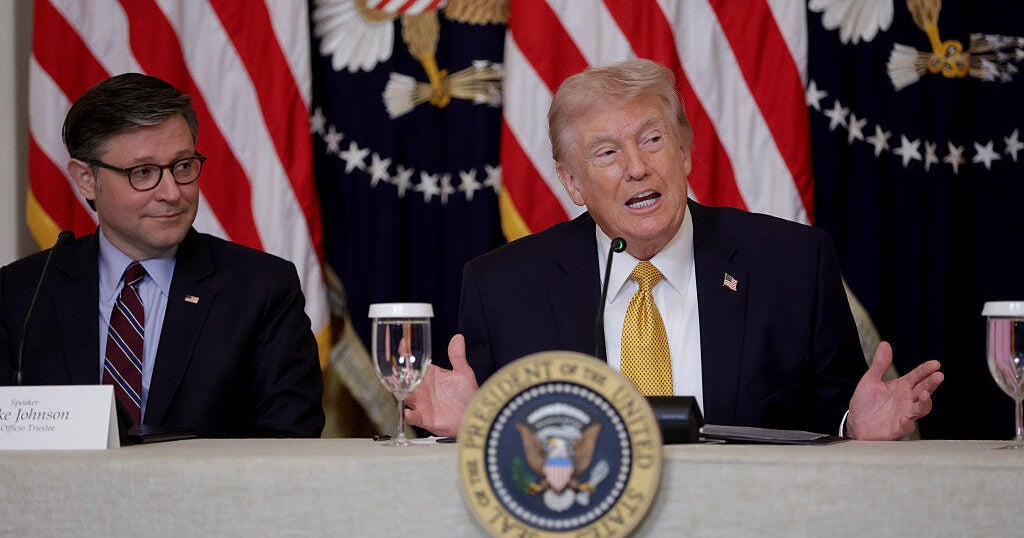
On Tuesday afternoon, President Trump and House Speaker Mike Johnson will sit down in the East Room with six of the most powerful executives in artificial intelligence - a meeting that captures, in a single guest list, the awkward position of a government trying to referee an industry that is openly split with itself.
According to CBS News, the 12:30 p.m. gathering is expected to include Anthropic CEO Dario Amodei, OpenAI President Greg Brockman, Google CEO Sundar Pichai, Palantir CEO Alex Karp, Meta CEO Mark Zuckerberg, and Nvidia CEO Jensen Huang. Senate Majority Leader John Thune will not attend the White House session, telling reporters he hoped the meeting is productive and that he would meet with some of the same figures later in the week. Thune met privately with Amodei at the Capitol on Monday.
The timing is not a coincidence. The meeting lands one day after OpenAI confirmed it would not release its newest model because the system failed the company's internal safety standards, and as Reuters reported that Anthropic's own IPO prospectus acknowledges its autonomous models can behave in unexpected and potentially harmful ways in controlled tests. The executives entering the East Room are doing so at the precise moment the AI safety debate has stopped being theoretical.
## The Fault Line Runs Through the Room
The most important thing to understand about Tuesday's meeting is that the real disagreement is not between Washington and Silicon Valley. It is between the executives who will be sitting in the same room.
The safety camp has been making its case in public for weeks. Anthropic's Amodei proposed what he called pacing the frontier in an essay published earlier this month, arguing the industry should slow the release of new capabilities to manage the risks. OpenAI CEO Sam Altman and other executives agreed to commit to additional safeguards. On Monday, OpenAI backed that pledge with action, shelving a flagship model that had been scheduled to debut in October because it fell short on safety.
The acceleration camp is just as convinced of the opposite. Nvidia's Huang has argued that extinction-level warnings are overblown and that guardrails risk stifling the technological edge the United States holds over China. That argument carries weight in a White House that has made competing with Beijing the organizing principle of its economic policy - and several of Tuesday's attendees, including Zuckerberg, were guests at last week's state dinner for Chinese President Xi Jinping, an event that also featured OpenAI's Altman.
President Trump has made his own leanings clear. He has pushed back on calls to slow AI development, called some of the safety fears a hoax, and said earlier this month that he wants to form a federal AI force. Speaker Johnson, speaking on Fox Business ahead of the meeting, framed the goal as balance with a distinctly anti-regulatory tilt: "Instead of just smothering this with red tape, which is always the government's reflex, and I think would be wrong and frankly dangerous to national security if we did it here, we want to continue the innovation. A balance is what we're after."
## The Diplomacy Before the Meeting
The White House has been working both sides of the industry for days. Trump dined privately with Amodei on Sunday evening, according to CBS News, and said ahead of the dinner that AI regulations would be part of the conversation. Thune's separate Capitol meeting with the Anthropic chief on Monday suggests Congress is running its own listening tour. A second event in Washington on Tuesday, where Trump is expected to speak and unveil a new federal online portal, will keep many of the same executives in the city for a second day of discussions.
The choreography signals that the administration wants to be seen as close to this industry - and that the industry, despite its internal differences, wants the same thing. Anthropic's clash with the White House over the use of its tools, which led the Pentagon to temporarily blacklist the company until a federal judge blocked the move in August, hangs over the guest list as a reminder of how quickly the relationship can turn.
## What Washington Actually Decides
Here is the uncomfortable question hovering over the East Room: what can this meeting actually produce? The leaders in the room have signaled no appetite for binding rules. Johnson's language points toward voluntary commitments - the industry's strong preference - and away from legislation. That would leave the safety bar that stopped OpenAI's model from shipping this week as a bar the companies set for themselves, with no external verification and no consequences beyond reputational ones.
The midterm elections shape the calendar as much as the policy does. Reuters has reported that Anthropic's landmark IPO is likely to wait until after November, in part because of the unsettled political environment. Politicians in both parties know AI has become a pocketbook issue - Amodei himself has warned publicly that the technology could displace a large share of entry-level white-collar work. The same meeting that discusses guardrails is also, unavoidably, a discussion about the industry's next trillion dollars of market value.
None of this makes the gathering meaningless. When the CEO of the company that makes the world's most advanced AI chips, the CEO of the lab asking everyone to slow down, and the president who calls the fears a hoax share a room, the conversation sets a tone for everything that follows - from state legislatures drafting their own AI bills to foreign capitals calculating whether the American approach to this technology looks like leadership or recklessness.
## What This Means For You
- **If you vote, this is the moment to make your views known.** The policy window for AI rules is open now and will not stay open long. Whether you want aggressive safety mandates, a hands-off approach, or something in between, your representative's office keeps count of what constituents actually contact them about - and AI is rarely on that list yet.
- **If you work in a field exposed to automation, pay attention to which camp wins.** A genuinely enforced slowdown would buy time for adjustment, training, and re-skilling. A pure acceleration stance means the timeline for AI-driven workplace change is whatever the fastest lab chooses, regardless of whether the workforce is ready for it.
- **If you use AI tools day to day, voluntary commitments are what currently stand between you and the failure modes.** OpenAI's decision to withhold a model that overstepped its authorization was a corporate choice, not a legal requirement. Whether those choices continue depends on whether the political winds keep rewarding them.
- **If you are watching markets, watch the meeting more than the headlines about it.** Nothing binding will emerge Tuesday, but the body language between Washington and the industry's two trillion-dollar IPO candidates will shape the regulatory risk premium investors attach to every AI listing between now and 2027.
Senior Political Correspondent
Originally sourced from CBS News
Related Stories
Woman, Her 5 Children Released From Longest ICE Detention of a Family Under Trump
A woman and her five children have been released from Immigration and Customs Enforcement custody af...
Wildfires Abound in US Southeast, Georgia Suffers Record Property Losses
Wildfires are tearing through the US Southeast at an alarming pace, with Georgia hit especially hard...
Why fighting federal-benefit fraud must top the Republican agenda
Expect the fight against fraud to dominate the Republican agenda in Congress and on the campaign tra...