AI shows how your brain cleans out harmful waste
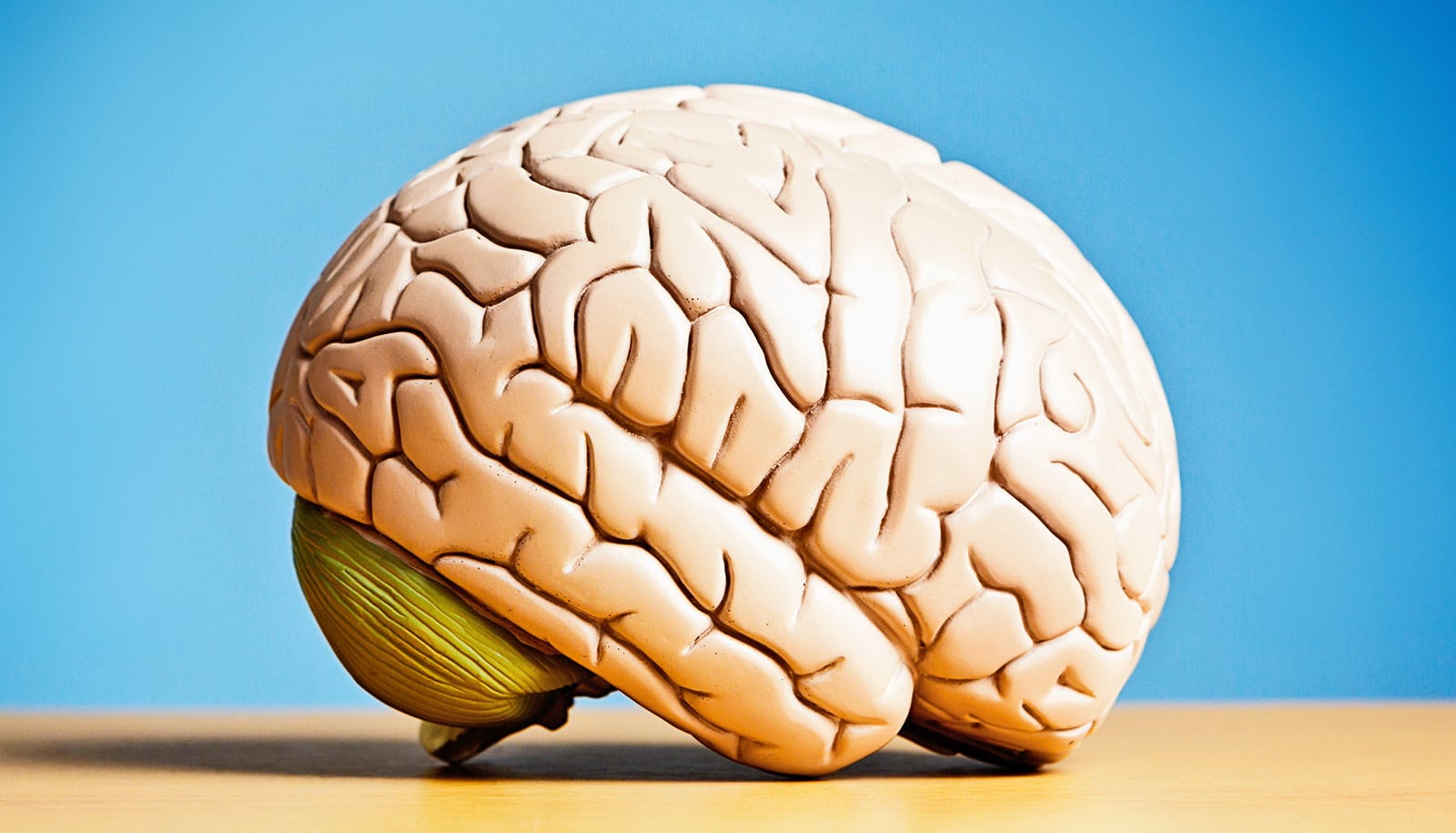
Scientists at the University of Rochester have achieved something that could reshape our understanding of brain health: they have used physics-informed artificial intelligence to measure the speed at which fluid circulates through the brain, a process that clears out toxic waste linked to Alzheimer's disease, Parkinson's, and other neurodegenerative conditions.
The discovery centers on the glymphatic system, a waste-clearing mechanism first identified in 2012 by neuroscientist Maiken Nedergaard. When you fall into deep sleep, cerebrospinal fluid flows through your brain, washing away metabolic waste products including amyloid beta proteins, the same proteins that form the plaques characteristic of Alzheimer's disease. It is essentially your brain's janitorial service, and it only works properly when you are getting quality deep sleep.
But until now, scientists had a major gap in their understanding. They knew the glymphatic system existed and that it was important, but they could not measure how fast the fluid actually moves through a living brain. Microscopy could show tiny patches in detail, but not the whole picture. MRI scans could image entire brains in three dimensions, but could not capture the slow fluid flow velocities that matter for waste clearance. The speeds involved are measured in microns per second, far below the detection threshold of conventional MRI.
Professor Douglas Kelley, a mechanical engineer at the University of Rochester, and his colleagues solved this problem by combining MRI imaging data with physics-informed neural networks. Rather than asking AI to simply guess flow patterns, they trained neural networks on videos of dye spreading through brain tissue over time, incorporating the physical laws governing fluid dynamics directly into the AI model. This approach allowed the system to infer flow speeds and tissue permeability from imaging data that conventional MRI alone could never capture.
The results, published in Science Advances, reveal that the glymphatic system operates through two distinct mechanisms operating at very different speeds. Fast-flowing cerebrospinal fluid moves along the brain's surface, between the skull and the brain tissue, at several microns per second. Meanwhile, a much slower flow trickles through the brain's deep tissue at roughly one-fiftieth of that speed. Both mechanisms are essential for clearing waste, but they operate on fundamentally different timescales.
This distinction matters enormously for understanding disease. If the slow deep-tissue flow becomes impaired, which appears to happen with aging, toxic proteins like amyloid beta can accumulate in precisely the deep brain regions most affected by Alzheimer's. The two-speed system also explains why some therapeutic approaches might work better than others. A treatment that speeds up surface flow might not address the real bottleneck, which is deep tissue clearance.
The researchers have been working with animal models so far, establishing baseline measurements in mice. But their ambitions extend far beyond that. Kelley and his team hope to eventually use these AI-powered measurements on human brains, opening the door to clinical applications that could change how we diagnose and treat neurological diseases.
Imagine being able to walk into a clinic, get an MRI, and receive a detailed assessment of how well your brain is clearing waste. That information could flag poor glymphatic circulation years before cognitive symptoms appear, giving doctors a window for early intervention that currently does not exist. It could also transform how we evaluate concussion recovery, since disrupted fluid circulation may persist long after a patient feels fine.
The broader implications for public health are significant. More than 6 million Americans currently live with Alzheimer's disease, a number projected to reach 13 million by 2050. The total cost of dementia care in the United States exceeds billion annually. Any tool that enables earlier detection or more targeted treatment could shift these trajectories dramatically.
The study also represents a growing trend in medical research: using AI not just for pattern recognition or diagnosis, but for extracting physical measurements from imaging data that would otherwise be invisible. Physics-informed neural networks are particularly powerful because they constrain the AI's outputs to respect known physical laws, meaning the results are not just statistically plausible but physically meaningful. This is a different application of AI than the chatbots and image generators that dominate headlines, and it may ultimately prove more consequential.
There are limitations, of course. Translating measurements from mouse brains to human brains involves significant scaling challenges. Human brains are roughly 3,000 times larger by volume than mouse brains, and the structural differences in how cerebrospinal fluid moves through them are not fully understood. Clinical trials to validate these measurements in humans will take years.
But the trajectory is encouraging. The combination of advanced imaging, physics-based modeling, and machine learning is creating tools that were science fiction just a decade ago. For a field that has seen far too many failed Alzheimer's drugs and dashed hopes, the ability to actually see and measure the brain's cleaning system in action represents genuine progress.
What This Means For You: The science of sleep and brain health is entering a new chapter. We have long known that deep sleep is when the brain clears out waste, but we could never measure how well that process was working in a living person. This research changes that, and the clinical implications are substantial. Within the next decade, you may be able to get a glymphatic function assessment as part of a routine brain health checkup, the same way you get a cholesterol test for heart health today. In the meantime, the research reinforces something we already knew but now understand more precisely: deep sleep is not optional. The glymphatic system only operates effectively during deep sleep phases, and even one night of poor sleep measurably reduces waste clearance. If you are chronically skimping on sleep, you are not just tired. You are impairing your brain's ability to clean itself. That is not wellness advice. That is neuroscience, and we can now measure it.
Editorial Team
Originally sourced from Futurity: Research News
Related Stories
YouTube is testing an AI search mode that \'feels more like a conversation\'
A new feature called Ask YouTube will let you pose complex questions and receive...
YouTube is testing an AI-powered search feature that shows guided answers
YouTube is rolling out the new AI search feature to Premium subscribers in the U.S. on an opt-in bas...
YouTube is giving creators a new weapon against AI deepfakes
YouTube is rolling out a new AI safety feature that could help creators spot deepfake-style videos u...