China dominates AI minerals. But one company claims the ocean floor has hundreds of years of supply
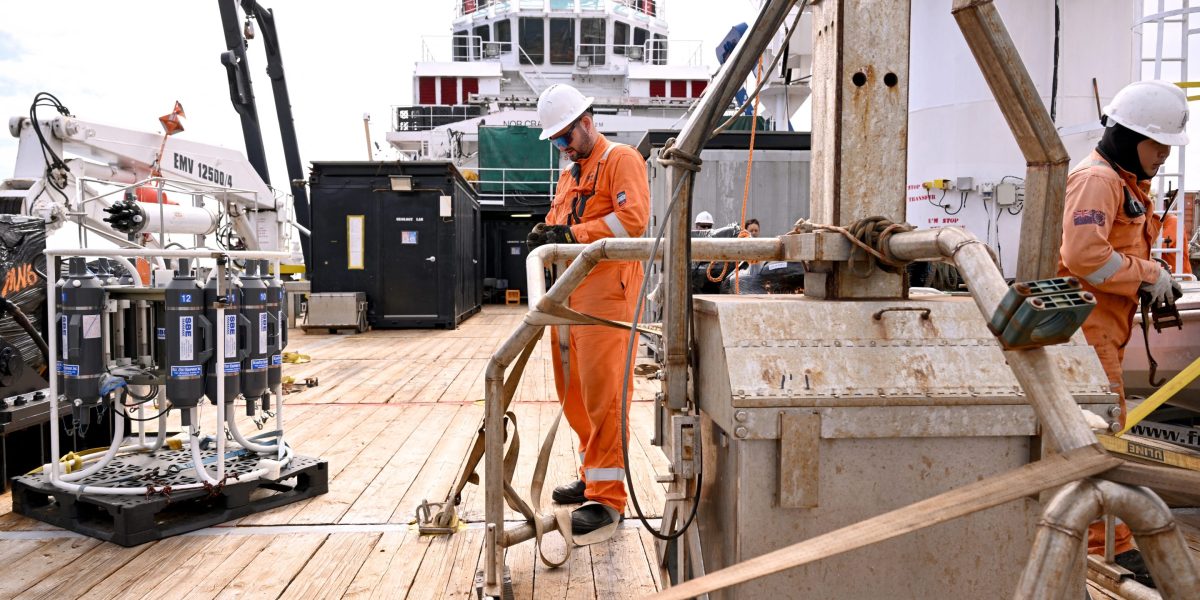
The race to control the minerals that power artificial intelligence has a new and unexpected frontier: the bottom of the ocean. As China tightens its grip on the rare earth elements and critical metals essential for AI chips, batteries, and advanced computing, a Canadian company called The Metals Company is making the case that the deep seabed contains enough resources to supply humanity for centuries.
The geopolitical dimensions of this story are impossible to ignore. China currently controls approximately 60 percent of global rare earth mining and 85 percent of rare earth processing. These materials, including neodymium, dysprosium, terbium, and yttrium, are essential components in the semiconductors, magnets, and laser systems that underpin AI infrastructure. When China threatened to restrict rare earth exports during trade disputes in 2019 and again in 2024, it sent shockwaves through the technology sector and forced a reckoning with just how dependent the rest of the world has become on a single supplier.
The United States and its allies have responded with a scramble to develop alternative supply chains. The CHIPS Act included provisions for domestic mineral processing. Australia, Canada, and several African nations have attracted billions in investment for new mining projects. Japan has invested in deep-sea extraction research. But developing new mines takes years, often a decade or more, and environmental opposition frequently delays or kills projects before they begin.
This is where deep-sea mining enters the conversation. The clarion clipperton zone in the Pacific Ocean, between Hawaii and Mexico, contains billions of polymetallic nodules sitting on the seabed. These nodules are rich in manganese, nickel, cobalt, and copper, all critical for battery production and increasingly important for AI hardware. The Metals Company and its competitors argue that harvesting these nodules is less environmentally destructive than terrestrial mining, requires no deforestation or community displacement, and could provide enough material to supply global demand for decades.
The environmental counterargument is substantial. The deep ocean floor is one of the least understood ecosystems on Earth. Scientists have documented unique species living in and around the nodules, including organisms that may play roles in carbon sequestration and nutrient cycling that we do not yet fully understand. The International Seabed Authority, which governs deep-sea mining in international waters, has been deadlocked for years between nations eager to exploit resources and those calling for a moratorium until environmental impacts are better understood.
The economics are compelling but uncertain. The Metals Company estimates that a single deep-sea harvesting operation could produce 1.3 million tons of nodules annually, worth billions of dollars at current market prices. The operating costs would be lower than many terrestrial mines because the nodules simply sit on the surface of the seabed, requiring no drilling or excavation. But the capital costs of building and deploying the specialized harvesting equipment are enormous, and no commercial-scale operation has yet proven the model works profitably.
For the AI industry specifically, the supply chain question is becoming existential. Training a single large language model can require thousands of specialized GPUs, each containing rare earth magnets and advanced semiconductor materials. As AI compute demand doubles roughly every four months, the pressure on mineral supply chains will only intensify. A breakthrough in deep-sea mining could fundamentally alter the economics of AI development by ensuring stable, affordable access to the materials that make it possible.
What This Means For You: The critical minerals squeeze is not abstract. It affects the price and availability of every piece of technology you own, from your phone to your car to the data centers powering the AI tools you use daily. If deep-sea mining proceeds, it could stabilize prices and prevent the kind of supply shocks that cause sudden price spikes in electronics and vehicles. If environmental concerns win and mining is delayed or banned, expect continued upward pressure on tech prices and increased urgency around recycling and material substitution. For investors, companies positioned in deep-sea mining technology, rare earth recycling, and alternative material development represent a long-term thematic bet on one of the defining resource challenges of the AI age.
Editorial Team
Originally sourced from Fortune
Related Stories
YouTube is testing an AI search mode that \'feels more like a conversation\'
A new feature called Ask YouTube will let you pose complex questions and receive...
YouTube is testing an AI-powered search feature that shows guided answers
YouTube is rolling out the new AI search feature to Premium subscribers in the U.S. on an opt-in bas...
Your next iPhone upgrade is going to hurt your wallet, and AI is to blame
Apple...