Flock’s Surveillance Network Is Watching Far More Than Your License Plate — And You Have No Say in It
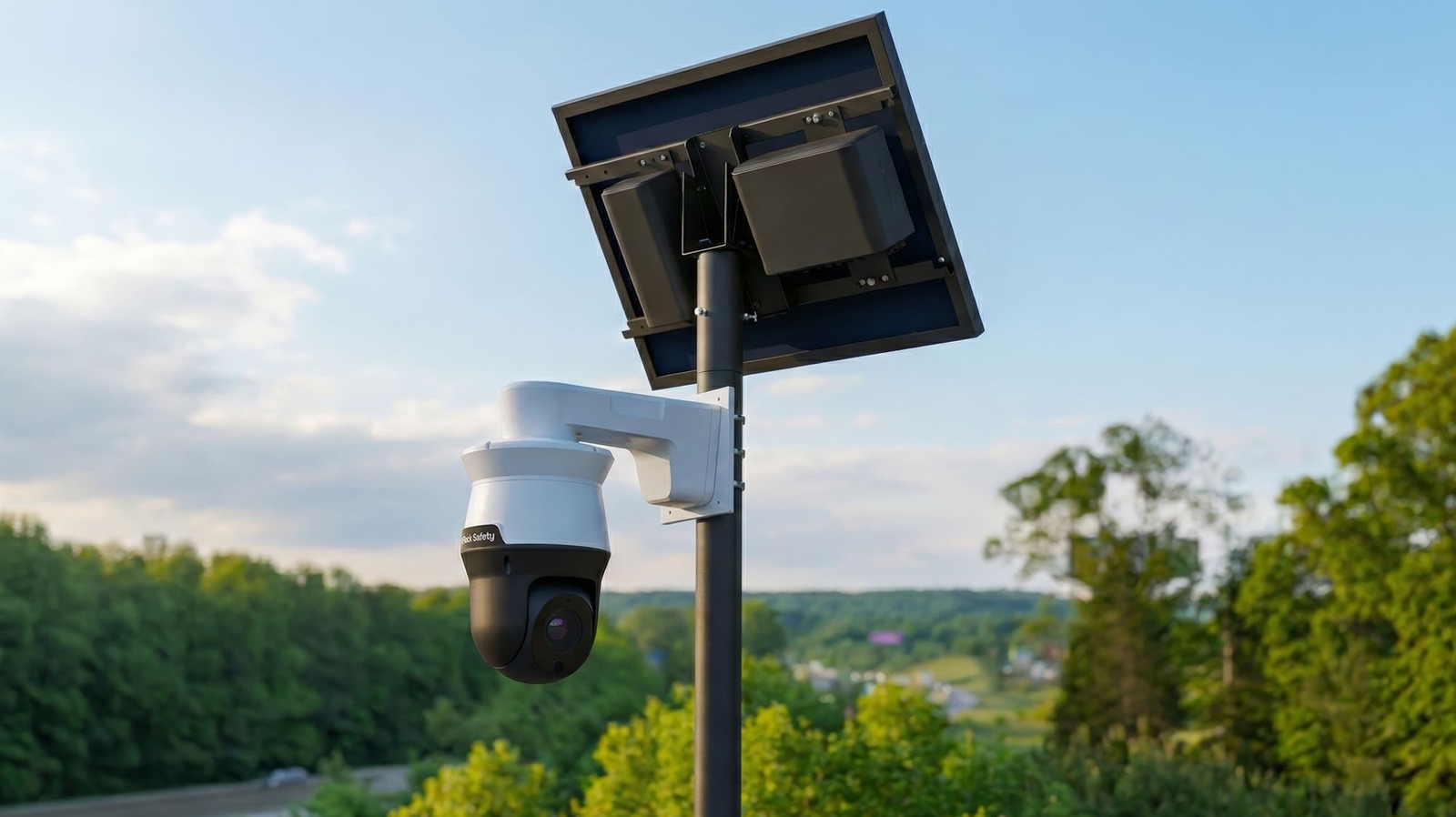
Flock Safety's license plate readers are in more than 12,000 communities across America. You've probably driven past one today. But what you may not realize is that those cameras are doing far more than reading your plate — they're building a national surveillance infrastructure that tracks where you go, what you drive, what you're wearing, and now, what sounds you make.
And in most of those 12,000 communities, you had no vote on whether this technology would watch you.
## Beyond License Plates
Flock started with automated license plate readers (ALPRs), which photograph every passing vehicle and log its plate number, location, date, and time. That alone is powerful — it creates a historical record of everywhere a car has been spotted by any Flock camera, searchable by police with a few keystrokes.
But Flock has expanded aggressively beyond plates. The company's cameras now create "vehicle signatures" using AI — cataloguing make, body type, color, damage patterns, aftermarket wheels, roof racks, and any other distinguishing features. Even without a plate, Flock can identify and track a specific vehicle across its entire network.
Then there's "people detection" software. Flock markets the ability to search for pedestrians using natural language queries like "man in blue shirt and cowboy hat" or "woman with red handbag." The company insists its cameras don't use facial recognition or record biometric data. But a system that can locate you by your clothing and track your movements across a city is functionally a tracking system, regardless of whether it identifies your face.
And then there's audio. Flock's Raven system deploys sound recognition devices that the company says listen for "critical sounds" — gunshots, car accidents, drag racing, fireworks. But marketing materials initially referenced "screaming" as a trigger before being amended to the vaguer term "distress." The system continuously buffers audio, retaining up to 50 seconds at a time, and records three-second clips when triggered. Whether this violates state wiretapping and privacy laws varies by jurisdiction — which is to say, most jurisdictions haven't addressed it at all.
## The National Surveillance Problem
Flock isn't just selling cameras to police departments. It's selling to schools, private businesses, residential communities, churches, parks, and prisons. Each installation feeds into a national network that any law enforcement customer can search.
The company's flagship product, Flock Nova, aggregates data from license plate readers, video cameras, audio sensors, 911 calls, jail records, computer-aided dispatch systems, and public records into a single investigative dashboard. A police major described using FlockOS: "We watched the vehicles enter through LPR, tracked them across the city, and our teams were in place before the suspects even got out of the cars."
That's not community safety. That's real-time tracking infrastructure.
The scope is staggering. In May 2025, 404 Media reported that local law enforcement had conducted over 4,000 searches on behalf of federal authorities using Flock data. Federal agencies accessed Flock ALPR data in states like California, Massachusetts, Illinois, Virginia, and Washington — states where laws explicitly prohibit such data sharing. In some cases, federal authorities accessed data despite customers explicitly banning their data from Flock's national lookup database.
## The Abuse Is Not Theoretical
Flock has instituted safeguards: auditable search logs, required public-safety reasons for queries, transparency portals, and bans on racially-charged search terms. These are genuine efforts. But they haven't prevented systemic abuse.
According to the Institute for Justice, police officers nationwide have used ALPRs to stalk women, coworkers, and acquaintances. Officers have used racial slurs in searches. In Oak Park, Illinois, 84% of Flock-related traffic stops targeted Black drivers, with 40% of stops resulting in "mistakes" — meaning the system flagged innocent people. In Texas, sheriff's deputies used the false pretense of a missing persons investigation to track a woman suspected of having an abortion.
The Electronic Frontier Foundation has documented hundreds of Flock searches targeting protesters and activist groups. These aren't edge cases — they're the predictable result of giving thousands of people access to a tool that tracks anyone's movements without a warrant.
Flock's internal auditing caught only a small fraction of these abuses. The rest came to light through external investigations and lawsuits. This suggests the actual scope of misuse is significantly larger than what's been documented.
## The Infrastructure Problem
The most important critique of Flock isn't what it does today — it's what the infrastructure enables tomorrow. A $7.5 billion company with cameras in 12,000 communities, audio sensors in public spaces, drone surveillance capabilities, and AI-powered search tools across all of these inputs isn't just a safety product. It's a mass surveillance platform that happens to currently be operated primarily for law enforcement.
Once this infrastructure is built, it's nearly impossible to dismantle. Cameras get purchased, poles get installed, contracts get signed, and communities become dependent on the data. The question isn't whether Flock is currently being misused — it is, documented extensively. The question is what happens when someone with more expansive ambitions gains access to this infrastructure.
The company's recent partnership with Ring — a Super Bowl ad framing their combined technologies as a "neighborhood watch" for finding lost dogs — illustrated the normalization strategy. Mass surveillance, presented as pet recovery. The partnership was canceled after public backlash, but the underlying technology and data-sharing capabilities remain.
## What This Means For You
**You are being tracked whether you know it or not.** If you live in or drive through any of Flock's 12,000+ communities, your vehicle's location, appearance, and potentially your physical description are logged in a searchable database. You don't need to be a suspect. You just need to be in front of a camera.
**Your local government probably didn't ask you.** Most Flock contracts are approved by police departments or city councils, not by popular vote. Check your local government's website for Flock contracts, or use the EFF's Atlas of Surveillance to see what's deployed in your area.
**Warrant requirements don't exist in most jurisdictions.** Flock's own safeguards require users to enter a "public-safety reason" for searches, but there's no judicial oversight. An officer's self-reported reason is the only gate. The Fourth Amendment's protection against unreasonable search and seizure was written for a world where surveillance required physical effort and specific targeting. Flock's system makes dragnet surveillance the default.
**State privacy laws are being bypassed.** Federal access to Flock data in states with explicit ALPR restrictions proves that state-level protections are insufficient without enforcement mechanisms. If your state banned ALPR data sharing, your data is still being shared.
**The time to act is before the infrastructure expands further.** Several cities have revoked Flock contracts after learning about federal immigration enforcement use. Others are passing local ordinances requiring warrants for surveillance data access. Find out what your city council has authorized and demand transparency and oversight — or removal.
Editorial Team
Originally sourced from BGR
Related Stories
YouTube is testing an AI search mode that \'feels more like a conversation\'
A new feature called Ask YouTube will let you pose complex questions and receive...
YouTube is testing an AI-powered search feature that shows guided answers
YouTube is rolling out the new AI search feature to Premium subscribers in the U.S. on an opt-in bas...
YouTube is giving creators a new weapon against AI deepfakes
YouTube is rolling out a new AI safety feature that could help creators spot deepfake-style videos u...