G7 Takes Aim at China’s Grip on Critical Minerals
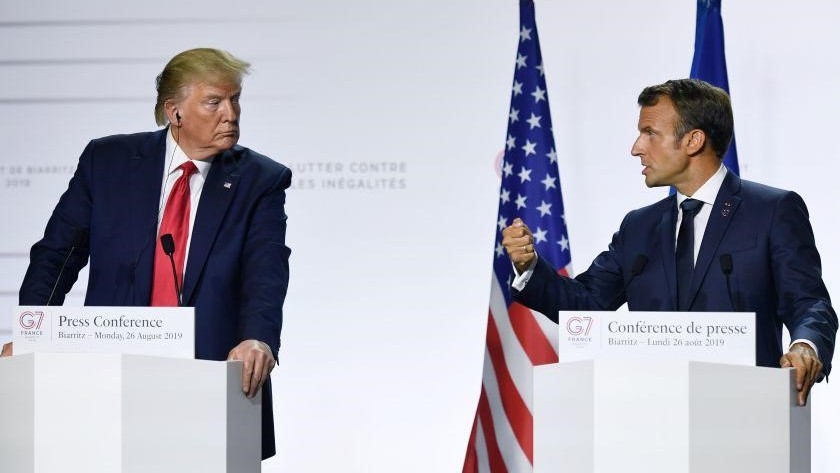
The G7 has launched a coordinated effort to break China's dominance over critical minerals — the raw materials that power everything from electric vehicles and smartphones to fighter jets and wind turbines. The initiative, announced at the G7 summit, targets a supply chain vulnerability that has deepened sharply over the past decade as China has consolidated control over mining, processing, and refining of materials the modern economy cannot function without.
The stakes are enormous. China currently processes roughly 60% of the world's lithium, 70% of its cobalt, and over 85% of rare earth elements. These minerals are essential for electric vehicle batteries, semiconductor manufacturing, defense systems, and renewable energy infrastructure. The concentration of supply in a single country — one with a documented track record of restricting exports for strategic advantage — represents what security analysts describe as a systemic risk to Western economies.
## Why This Matters Now
The timing is not accidental. Three developments have forced the issue:
First, China has demonstrated its willingness to weaponize mineral supply. In 2023, Beijing imposed export controls on gallium and germanium — materials essential for semiconductors and fiber optics. In 2024, it expanded restrictions to include antimony and graphite. Each restriction sent shockwaves through dependent industries and confirmed what supply chain analysts had been warning about: China will use its mineral dominance as a geopolitical lever.
Second, the energy transition has dramatically increased demand for these materials. An electric vehicle requires roughly six times the mineral content of a conventional car. A wind turbine needs nine times the mineral input of a gas-fired power plant per unit of electricity generated. As governments push for decarbonization, demand for lithium, cobalt, nickel, and rare earth elements is projected to increase by 500% or more by 2040.
Third, the defense sector has identified critical minerals as a national security priority. Advanced munitions, radar systems, and electronic warfare capabilities all depend on materials where supply is controlled by a strategic competitor. The Pentagon has identified over 250 critical mineral supply chains that are vulnerable to disruption.
## What the G7 Plan Actually Does
The alliance — which includes the United States, Canada, the United Kingdom, France, Germany, Japan, and Italy, along with the European Union — outlines several concrete actions:
**Diversification of mining and processing.** The plan calls for accelerated development of new mines and processing facilities in allied nations, including projects in Canada, Australia, and parts of Africa that are not controlled by Chinese interests. permitting timelines — which currently average 10-15 years for new mines in Western countries — are targeted for reduction through regulatory streamlining.
**Strategic stockpiling.** Member nations are expanding their national stockpiles of critical minerals to provide buffer capacity in case of supply disruptions. The U.S. Defense Production Act has already been used to fund domestic processing capacity for rare earth elements.
**Recycling and circular economy.** Less than 1% of rare earth elements are currently recycled. The plan targets significant increases in recycling rates, particularly for electronic waste, which contains recoverable quantities of critical minerals at concentrations often higher than natural ore deposits.
**Research and substitution.** Funding for alternative materials that can reduce dependence on the most constrained minerals. This includes battery chemistries that use less cobalt and nickel, and permanent magnets that use fewer rare earth elements.
## The Hard Reality
The G7 initiative is necessary but faces formidable obstacles. Building new mines and processing facilities takes years. Permitting, environmental review, and community opposition can delay projects for a decade or more. China's existing infrastructure advantages — developed over 30 years of strategic investment — cannot be replicated quickly.
There are also economic challenges. Chinese processors benefit from economies of scale, lower labor costs, and government subsidies that make their products significantly cheaper. Competing Western facilities will require sustained government support to achieve cost competitiveness, which raises questions about long-term commitment during inevitable political transitions.
And there's a geopolitical wrinkle: many of the nations with the richest mineral deposits — the Democratic Republic of Congo, for example, which holds over 70% of the world's cobalt — have existing relationships with Chinese mining companies that will be difficult to displace.
## What This Means For You
Critical mineral supply chains affect your daily life in ways you might not realize:
- **Electric vehicles**: The minerals in your EV battery are almost certainly processed in China. If supply restrictions tighten, EV prices could increase significantly — or availability could shrink. If you're considering an EV, the next 2-3 years may offer the best combination of pricing and availability before supply chain disruptions potentially tighten the market.
- **Electronics**: Your phone, laptop, and smart home devices all contain rare earth elements and other critical minerals. Supply constraints could mean higher prices, longer delivery times, or both — particularly for premium devices that use the most specialized materials.
- **Investment opportunities**: The push to build alternative supply chains is creating investment opportunities in mining companies, processing technology firms, and recycling operations in allied nations. Companies that secure offtake agreements with Western governments or automotive manufacturers are positioned to benefit from the diversification push.
- **Energy costs**: Wind turbines and solar panels require critical minerals. If supply tightens, the cost of renewable energy deployment increases — potentially slowing the energy transition and keeping electricity prices higher for longer.
The race for critical minerals is one of the defining economic and security challenges of this decade. The G7 plan is a starting point, not a solution. Watch for whether the ambitious timelines survive contact with regulatory reality.
Editorial Team
Originally sourced from OilPrice
Related Stories
YouTube is testing an AI search mode that \'feels more like a conversation\'
A new feature called Ask YouTube will let you pose complex questions and receive...
YouTube is testing an AI-powered search feature that shows guided answers
YouTube is rolling out the new AI search feature to Premium subscribers in the U.S. on an opt-in bas...
YouTube is giving creators a new weapon against AI deepfakes
YouTube is rolling out a new AI safety feature that could help creators spot deepfake-style videos u...