KKR's $10 Billion Bet: Why AI Infrastructure Is the Next Trillion-Dollar Race
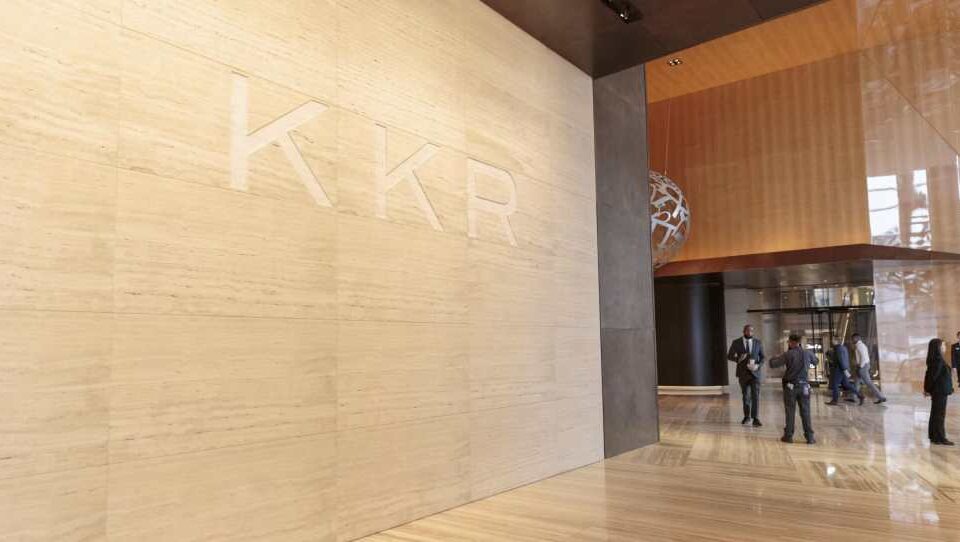
When people talk about AI, they usually mean the models—the chatbots, the image generators, the autonomous agents. But private equity giant KKR just made a $10 billion wager on something far less glamorous and far more consequential: the physical infrastructure that makes all of it possible.
Helix Digital Infrastructure, KKR's newly launched standalone company, is designed to do what hyperscale cloud providers have been struggling to do fast enough—build data centers, secure power generation, lay fiber, and handle cooling at a scale that matches the explosive growth in AI compute demand. And they've put Adam Selipsky, the former CEO of Amazon Web Services, in charge.
The Real Bottleneck Isn't Chips
NVIDIA makes the most advanced AI chips in the world. OpenAI and Anthropic build the smartest models. But none of that matters if you can't plug the servers in.
The AI industry is running into hard physical limits. Power grids in major data center markets—Virginia, Texas, the Pacific Northwest—are maxed out. Permitting a new data center can take 18 to 36 months. Fiber connectivity, cooling systems, and land acquisition have become the rate-limiting steps in AI deployment, not GPU availability.
Helix is positioning itself as the company that solves those problems. Rather than competing with hyperscalers like AWS, Azure, and Google Cloud, Helix will partner with them—building the infrastructure they need and leasing it back through long-term contracts. It's a utility model applied to the AI economy.
Why Selipsky?
Adam Selipsky isn't a random executive pick. During his tenure leading AWS, the cloud division doubled in size, surpassed $100 billion in annual revenue, and navigated the explosion of GPU-driven AI workloads. He understands hyperscale from the inside—the demand side, the supply constraints, and the political dynamics of data center siting.
At Helix, Selipsky faces a very different challenge: not scaling an existing platform, but building physical infrastructure from the ground up in markets where energy policy, local opposition, and regulatory complexity can stall projects for years. His AWS experience gives him relationships with the biggest customers on day one.
The $700 Billion Spending Wave
Helix launches at a moment when the largest technology companies are preparing to spend an unprecedented amount on infrastructure. Alphabet, Amazon, Meta, and Microsoft are projected to pour nearly $700 billion into capital expenditures over the next year, with a large share earmarked for data centers and energy projects.
Even that level of spending may not be enough. AI models are growing in size and complexity faster than infrastructure can be built. Inference workloads—the cost of running models in production—are growing even faster than training workloads. The gap between supply and demand keeps widening, and that gap is exactly where Helix intends to operate.
What This Means for Startups and Smaller Players
The infrastructure shortage hasn't just affected big tech. Over the past year, early-stage AI companies have been stuck waiting for compute resources, competing with giants for limited capacity. If Helix can bring new data center capacity online faster than the hyperscalers can build it themselves, it could ease those constraints and stabilize pricing across cloud platforms.
That matters because compute costs are one of the biggest barriers to AI startup viability today. A company that can prototype but can't afford to run its model in production is a company that fails. More infrastructure supply means more startups survive long enough to find product-market fit.
The Investment Thesis: AI as Infrastructure
Helix also signals a shift in how investors think about AI. The first wave of funding went to model builders and chipmakers—companies like OpenAI, Anthropic, and NVIDIA. The next wave is starting to look a lot like utilities: steady returns over long periods, backed by physical assets that generate reliable cash flow.
Data centers, power plants, and fiber networks are the pipelines and grids of the AI economy. KKR, which has backed infrastructure projects for decades, is essentially betting that AI infrastructure will become as fundamental as energy infrastructure—and just as profitable for long-term holders.
Analysts project that total AI infrastructure investment could surpass $1 trillion by the end of the decade. Meeting that demand will require massive increases in power capacity, particularly in the United States, where estimates call for tens of gigawatts of new supply. Helix's $10 billion is a starting point, with room to scale through partnerships and co-investments.
What This Means For You
If you're an investor, AI infrastructure is becoming a distinct asset class—less volatile than tech stocks, backed by long-term contracts, and essential to the entire AI supply chain. Watch for more PE firms to launch similar vehicles.
If you work in tech, the infrastructure shortage affects your roadmap. Compute costs and availability constrain product decisions. More supply means faster deployment cycles and lower costs.
If you're thinking about career moves, infrastructure is where the jobs are heading. Data center operations, energy engineering, fiber optics, and cooling systems are all scaling hiring. The AI economy needs electricians and project managers as much as it needs researchers.
And if you're simply watching the AI narrative evolve, understand this: the companies that win the next decade of AI won't just be the ones with the best models. They'll be the ones that can keep the lights on.
Editorial Team
Originally sourced from Core News Daily
Related Stories
YouTube is testing an AI search mode that \'feels more like a conversation\'
A new feature called Ask YouTube will let you pose complex questions and receive...
YouTube is testing an AI-powered search feature that shows guided answers
YouTube is rolling out the new AI search feature to Premium subscribers in the U.S. on an opt-in bas...
Your next iPhone upgrade is going to hurt your wallet, and AI is to blame
Apple...