Maps Show 40 Cities Taking Stand Against AI Data Centers Draining Resources
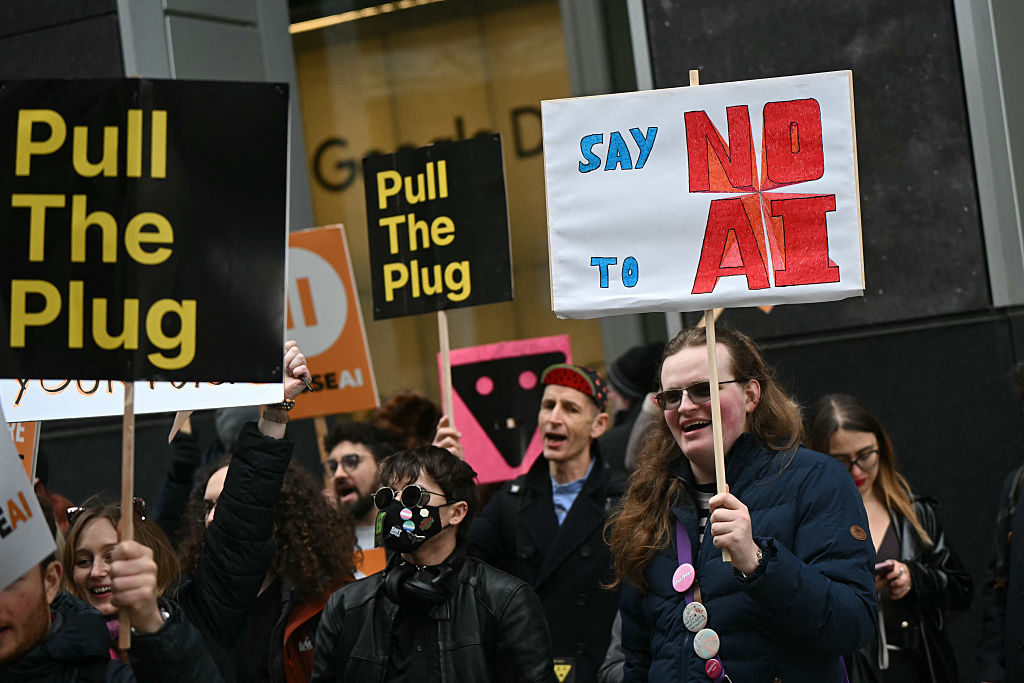
Forty mayors from cities spanning five continents have signed a new global pact to rein in how AI-driven data centers are built and operated in their jurisdictions. The agreement, launched by the C40 Cities climate coalition during London Climate Action Week, represents the most coordinated municipal pushback yet against a data center building boom that is consuming electricity, water, and land at rates that local leaders say are unsustainable.
The timing is not accidental. C40 estimates that its member cities currently host roughly 1,700 data centers, with capacity expected to grow by more than 40% in 50 of those cities. Phoenix alone has pending permit requests that could double the region's electricity demand. Melbourne projects that its planned data centers could consume 20 billion liters of water annually — about 4% of the city's entire drinking supply. These numbers aren't projections from some distant future; they're happening now.
The pact was catalyzed by the mayors of Phoenix and Melbourne, who raised alarms about escalating demands on local utilities and land. Cassie Sutherland, a managing director at C40, said cities worldwide reported "very similar" challenges and needed a unified voice to set conditions for responsible development. The framework they've produced calls for data centers to be built on abandoned or underused land, minimize noise, heat, and air pollution, run on renewable energy with battery storage, sharply reduce water use and emissions, capture and reuse waste heat, and invest in local jobs, infrastructure upgrades, and community engagement.
It's an ambitious wish list, and the pact is careful to acknowledge that mayors cannot impose all these standards alone. The framework emphasizes collaboration with utilities, national governments, and private developers. That's both a strength and a vulnerability. In the United States, where about half the signatory cities are located, regulated utility monopolies have a financial incentive to predict that electricity demand will rise much faster than it actually does. They can use those predictions to justify overspending on new infrastructure — wires, transformers, substations — and then add the cost plus a roughly 10% profit margin to customer bills over the next three decades. The data center boom is the best thing that has happened to these utilities in years.
NextEra Energy, which operates through subsidiaries like Florida Power and Light, recently acquired Dominion Energy — the monopoly provider in northern Virginia's "data center alley." The acquisition is explicitly designed to position NextEra to profit from the data center building boom. In Florida, NextEra famously employed one lobbyist for every two state legislators. The regulatory arena is where utilities make their real money, and data centers give them the demand projections they need to justify billion-dollar buildouts.
For residential customers, this creates a double squeeze. Data centers drive up demand for electricity, which utilities use to justify rate increases and infrastructure spending. Ratepayers fund the buildouts whether they benefit from them or not. Meanwhile, data centers compete with housing for buildable land and with communities for water, driving up costs across the board. Some states have already suspended tax incentives or considered moratoriums on new data center construction, but those are piecemeal responses to a systemic problem.
The absence of Southeast Asian cities from the pact is notable. The region hosts more than 2,000 data centers, and its energy demand is expected to more than double within five years, driven by major investments from Microsoft, Google, and Nvidia. No Southeast Asian cities signed on, citing national-level constraints. That's a significant gap in a framework that aspires to global standards.
Phoenix Mayor Kate Gallego captured the balancing act facing every signatory city: "We just want to make sure that we get it right for our local residents and for the health of our planet." Melbourne Mayor Nicholas Reece was more pointed, warning that cities must avoid a "race to the bottom" where governments chase investment without safeguards. That race is already well underway.
What This Means For You: If you live in or near a city with a growing data center presence, you're already paying for it. Check your utility bill for recent rate increases and look into whether your state has regulations limiting how much of new infrastructure costs can be passed to residential customers. The C40 pact won't change anything overnight — each city will have to translate the framework into its own regulations, and the timeline for that is measured in years, not months. But the pact creates a template and a coalition that local activists and city councils can point to when pushing back against projects that don't meet these standards. The question isn't whether AI needs data centers. It's who pays for them, and whether the communities hosting them get anything in return.
Editorial Team
Originally sourced from Newsweek
Related Stories
YouTube is testing an AI search mode that \'feels more like a conversation\'
A new feature called Ask YouTube will let you pose complex questions and receive...
YouTube is testing an AI-powered search feature that shows guided answers
YouTube is rolling out the new AI search feature to Premium subscribers in the U.S. on an opt-in bas...
YouTube is giving creators a new weapon against AI deepfakes
YouTube is rolling out a new AI safety feature that could help creators spot deepfake-style videos u...