NVIDIA Bets Big on Humanoid Robots: Unitree Partnership Signals the Next AI Frontier
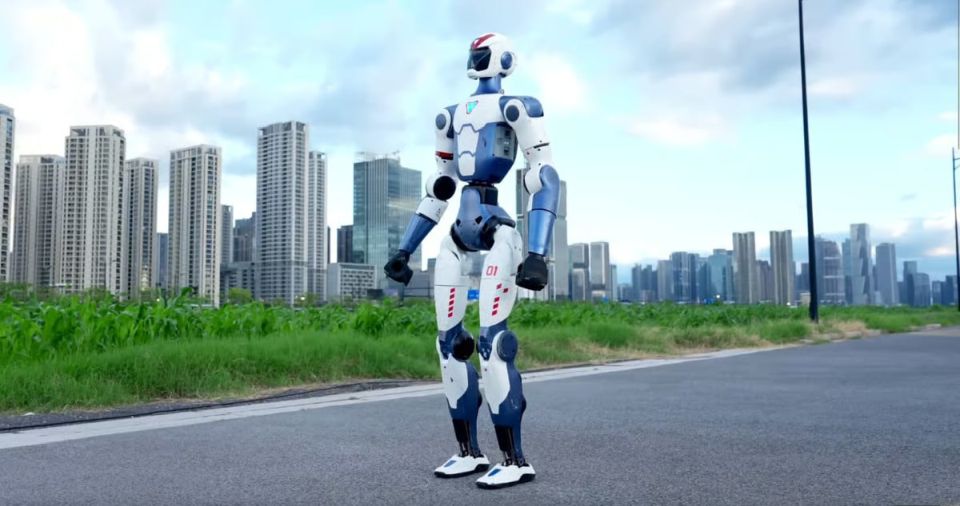
NVIDIA made its most ambitious move yet into the physical world at Computex 2026, selecting Chinese robotics startup Unitree as the first partner for its humanoid robot AI platform - a decision that signals the chip giant sees robotics as its next trillion-dollar frontier.
The announcement, delivered during CEO Jensen Huang's keynote in Taipei, positions NVIDIA not just as a GPU company but as the foundational platform for intelligent machines that walk, see, and reason. Unitree, best known for its robot dogs and the G1 humanoid, will integrate NVIDIA's Isaac GR00T foundation model and the new Jetson Thor chip to accelerate development of bipedal robots that can operate in unstructured environments.
This isn't a side project. Huang dedicated significant keynote time to what he called "physical AI" - the convergence of large language models, computer vision, and real-time control systems that enables machines to interact with the physical world. "The next wave of AI isn't just about thinking," Huang said. "It's about doing."
The choice of Unitree is strategically significant. While Boston Dynamics and Tesla's Optimus grab headlines in the West, Unitree has emerged as China's most capable humanoid robotics company, with a robot that can already walk, run, and perform basic manipulation tasks at a fraction of the cost of its American competitors. By partnering with Unitree, NVIDIA gains access to rapid hardware iteration cycles and a market where robotics adoption is accelerating faster than anywhere else on Earth.
Jim Cramer immediately flagged the implications for ARM Holdings, noting that NVIDIA's new RTX Spark superchip - announced at the same event - is built on ARM architecture. "The Nvidia superchip is a game-changer for ARM," Cramer wrote on X. He's right to connect the dots: if NVIDIA is building the brains for millions of robots, and those brains run on ARM-based silicon, ARM's addressable market just expanded beyond phones and servers into physical intelligence.
The RTX Spark is particularly notable. Designed as a desktop supercomputer for AI developers, it runs on ARM-based Grace CPUs paired with next-gen Blackwell GPUs. The message is clear: NVIDIA wants developers building on ARM, and it's willing to create the hardware ecosystem to make that happen. This is a long-term strategic play that could reshape the chip architecture landscape.
For investors, the picture is nuanced. NVIDIA's expansion into robotics validates its platform strategy - the same way CUDA locked in developers for GPU computing, Isaac GR00T and Jetson Thor aim to lock in robotics developers. But the Unitree partnership also raises geopolitical questions. As U.S.-China tech tensions escalate, NVIDIA's reliance on a Chinese hardware partner for its flagship robotics platform could become a vulnerability.
The competition isn't standing still. Tesla continues to develop Optimus internally, Boston Dynamics has Hyundai's backing, and Figure AI raised $675 million from Jeff Bezos, Nvidia, and Microsoft. The difference is that NVIDIA is positioning itself as the arms dealer - providing the AI infrastructure that every robotics company needs, regardless of who builds the body.
What's clear from Computex 2026 is that NVIDIA no longer sees itself as a chip company. It's an intelligence company, and intelligence is moving from servers into machines that share our physical world. The Unitree partnership is the first step in that transition. Expect many more.
What This Means For You: NVIDIA's pivot to robotics and ARM-based AI chips is not just a tech industry story - it's a signal that the next decade of computing will be defined by intelligent machines. If you're investing in tech, NVIDIA's platform play means its growth runway extends far beyond data centers. If you're a worker wondering about AI job displacement, the robotics push means physical labor automation is coming faster than most predicted. And if you're a developer, the RTX Spark and Isaac GR00T represent a new platform as significant as the iPhone was for mobile. The question isn't whether NVIDIA's bet on physical AI will matter. The question is how quickly the rest of the world catches up.
Editorial Team
Originally sourced from TechStartups.com
Related Stories
YouTube is testing an AI search mode that \'feels more like a conversation\'
A new feature called Ask YouTube will let you pose complex questions and receive...
YouTube is testing an AI-powered search feature that shows guided answers
YouTube is rolling out the new AI search feature to Premium subscribers in the U.S. on an opt-in bas...
YouTube is giving creators a new weapon against AI deepfakes
YouTube is rolling out a new AI safety feature that could help creators spot deepfake-style videos u...