Sen Tom Cotton urges DOJ to probe Chinese bid to 'kneecap' American AI
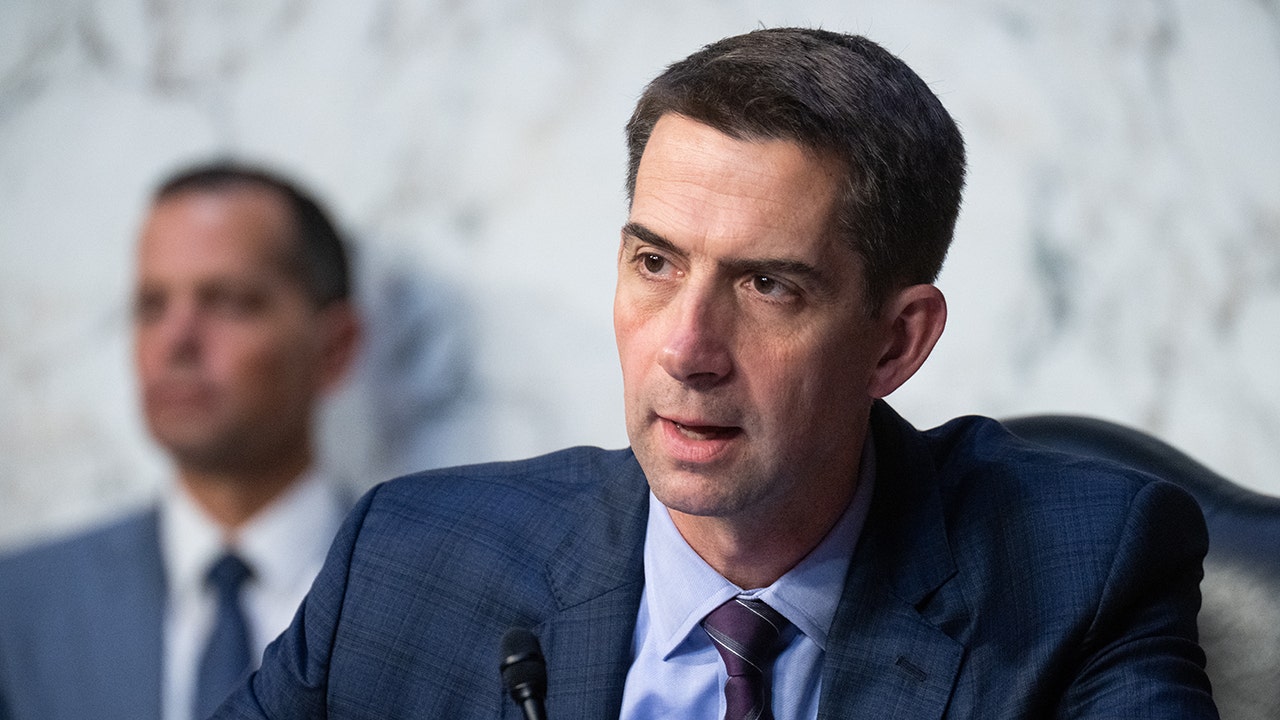
The battle for artificial intelligence supremacy between the United States and China has moved beyond data centers and chip manufacturing — and straight into the realm of covert influence operations. Sen. Tom Cotton is now urging the Justice Department to investigate what he calls a coordinated Chinese campaign to undermine American AI infrastructure from within.
Cotton's letter to Acting Attorney General Todd Blanche, obtained exclusively by Fox News Digital, alleges that Chinese state media, foreign-funded advocacy groups, and a network of organizations bankrolled by American tech tycoon Neville Roy Singham have spent years building opposition to U.S. data center construction and AI infrastructure projects. The implications stretch far beyond Silicon Valley — they cut to the heart of America's economic competitiveness and national security.
**The Singham Network: $278 Million in Influence**
At the center of the controversy sits Singham, a self-avowed Marxist who now lives in Shanghai and has funneled $278 million into a series of nonprofits including CodePink, the People's Forum, Tricontinental, and BreakThrough News. These groups have organized protests against AI development, semiconductor export controls, and large-scale data center projects across the United States.
According to a report from the Bitcoin Policy Institute titled "Foreign Influence in the Campaign Against American AI," three separate streams of influence — Chinese state media, the Singham network, and foreign-funded advocacy organizations — have increasingly aligned around efforts to block or delay new AI-related infrastructure in the U.S.
The strategic calculation is transparent: while Beijing subsidizes up to half of the energy costs for its own AI data center operators, Chinese-linked campaigns in the U.S. are framing data centers as environmentally and economically dangerous. It's a playbook that weaponizes legitimate environmental concerns against American technological advancement.
**Protests With Purpose**
The Singham-funded groups have worked closely with two self-described communist organizations in the U.S. — the ANSWER Coalition and the Party for Socialism and Liberation — to organize protests against companies like Palantir Technologies, Lockheed Martin, and Google. These demonstrations often name-and-shame firms for doing business with the U.S. government on issues where China has major interests.
Earlier this year, Sen. Bernie Sanders and Rep. Alexandria Ocasio-Cortez organized an event on the "existential threat of AI" that featured speakers closely affiliated with the Chinese Communist Party, including Zeng Yi of the Beijing Institute of AI Safety and Governance and Xue Lan, a counselor to China's State Council. Neither responded to requests for comment.
**The Data Act and Policy Response**
Cotton has introduced the "DATA Act of 2026," which would lift regulatory controls to allow manufacturers, data centers, and other energy-intensive industries to build new electricity systems separate from the consumer electrical grid. The bill directly addresses one of the key talking points used by anti-data center campaigns — rising electricity costs for consumers.
Billionaire investor Kevin O'Leary has also been vocal about the strategic imperative, arguing that data centers, power generation, and advanced computing capacity are now critical national assets in the global competition for AI leadership.
**What This Means For You**
This isn't just Beltway drama. The outcome of this influence battle will shape whether America maintains its edge in AI or cedes ground to China. For workers in tech, energy, and construction, the data center boom represents real jobs and economic opportunity — but only if infrastructure projects can move forward. For everyday consumers, the irony is stark: Chinese-linked groups are amplifying concerns about your electricity bill while Beijing subsidizes its own data centers. Understanding who is funding the campaigns you see in your social feeds — and why — has never been more important.
Editorial Team
Originally sourced from Fox News
Related Stories
YouTube is testing an AI search mode that \'feels more like a conversation\'
A new feature called Ask YouTube will let you pose complex questions and receive...
YouTube is testing an AI-powered search feature that shows guided answers
YouTube is rolling out the new AI search feature to Premium subscribers in the U.S. on an opt-in bas...
YouTube is giving creators a new weapon against AI deepfakes
YouTube is rolling out a new AI safety feature that could help creators spot deepfake-style videos u...