Trump says he's postponing AI executive order "because I didn't like what I was seeing"
Trump Postpones AI Executive Order: What It Means for the Future of AI Regulation
The most significant AI policy move of 2026 just hit a wall — and it came from the president himself.
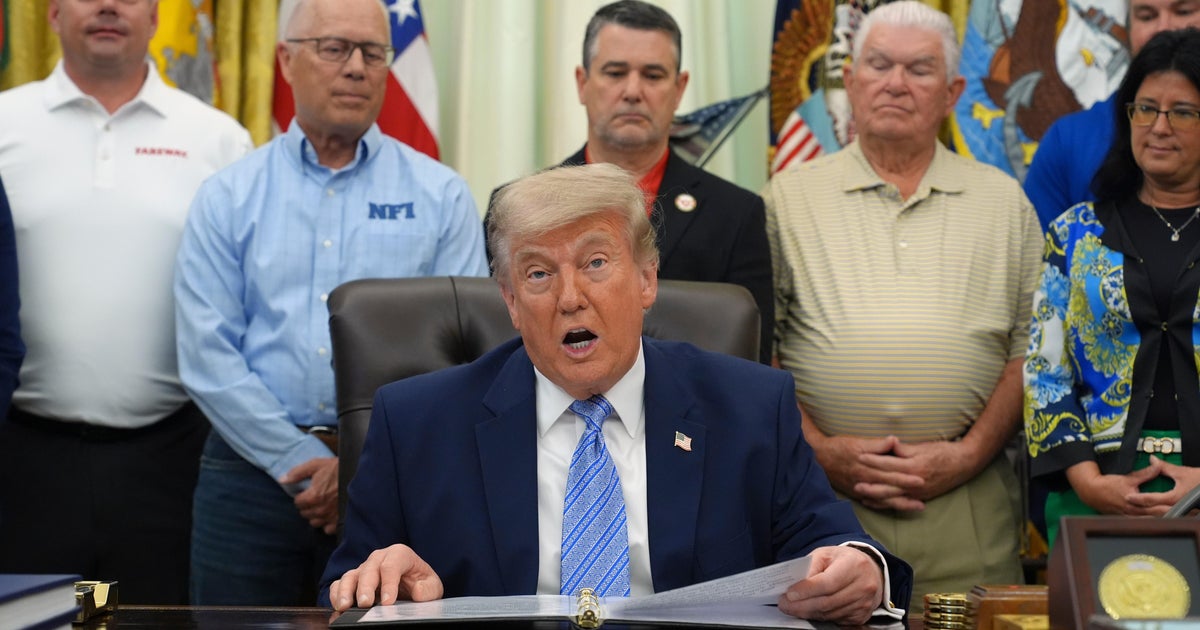
President Trump announced Thursday he is postponing the signing of a widely anticipated executive order on artificial intelligence, telling reporters in the Oval Office that he "didn't like what I was seeing" in the draft. The order, which was expected to be signed at a press event Thursday afternoon, would have established the federal government's approach to AI oversight and development.
The president's reasoning was blunt: "I think it gets in the way of, you know, we're leading China, we're leading everybody, and I don't want to do anything that's going to get in the way of that lead."
It's a statement that reveals a fundamental tension in AI policy that has been building for months — and the implications stretch far beyond Washington.
Why the Order Was Pulled
The executive order had been in the works for weeks, with input from technology companies, national security officials, and civil society groups. It was expected to address several key areas: federal agency use of AI, safety testing requirements for advanced models, and guidelines for responsible deployment in critical infrastructure.
But sources familiar with the drafting process say there were internal disagreements about how prescriptive the regulations should be. Some officials pushed for mandatory safety evaluations before large AI systems could be deployed, similar to the EU AI Act's risk-based framework. Industry lobbyists — including representatives from major AI companies — argued that such requirements would slow American innovation and give Chinese competitors an opening.
The president appears to have sided with the latter camp, at least for now. "AI is causing tremendous good," he said, "and creating many jobs." The suggestion that regulation could function as a "blocker" to American competitiveness was enough to pause the entire effort.
The Competitive Argument — And Its Problems
The "we can't regulate because China" argument has become the default talking point for anyone opposing AI oversight in the United States. And it has some merit: China's AI development has accelerated dramatically, with models like DeepSeek and Qwen demonstrating capabilities that rival or exceed Western counterparts in certain benchmarks. The fear is that American regulation will create compliance costs and deployment delays that Chinese companies — operating under a very different regulatory framework — won't face.
But the argument has a critical flaw: it assumes regulation and innovation are mutually exclusive. The EU AI Act, for all its imperfections, didn't stop European AI investment. Responsible regulation can actually accelerate innovation by creating clear rules of the road that give businesses confidence to invest, rather than leaving them in a gray area where any deployment might later be found non-compliant.
What's more, the companies loudest about regulatory burden are also the ones most capable of absorbing it. OpenAI, Google, and Anthropic have billions in funding and entire compliance teams. The companies that regulation would actually protect — startups, small businesses, healthcare providers deploying AI tools — aren't the ones lobbying against it.
What Happens Now
The executive order is postponed, not killed. The White House has indicated it will continue working on the draft, and there's still broad bipartisan support for some form of federal AI guidance. But the delay sends a clear signal: in this administration, competitive advantage comes before regulatory guardrails.
For the AI industry, this is a mixed blessing. Companies get more time to deploy without federal oversight, but they also get more uncertainty. Without clear federal standards, companies face a patchwork of state regulations — California's AI transparency law, Colorado's consumer protection rules, and others — that create compliance complexity far beyond what a single federal framework would impose.
The national security implications are also significant. The executive order was expected to address AI use in critical infrastructure, defense systems, and surveillance. Delaying those provisions means the government's own AI deployment remains largely ungoverned by formal policy.
What This Means For You
If you work in AI or technology, this delay means the regulatory vacuum continues. Plan for a patchwork of state and local regulations rather than a single federal standard, and build compliance flexibility into your products from the start. If you're an investor, the postponement is short-term bullish for AI companies (less compliance cost) but long-term uncertain (the rules will eventually come, and companies that ignored the writing on the wall will scramble). For everyone else, the absence of federal AI oversight means the technology will continue to be deployed faster than the safeguards around it — which is great for innovation and terrible for the people most likely to be harmed by untested systems. The order will likely return, probably in a watered-down form. The question is whether it arrives before or after a high-profile AI failure forces Congress's hand.
Editorial Team
Originally sourced from CBS News
Related Stories
YouTube is testing an AI search mode that \'feels more like a conversation\'
A new feature called Ask YouTube will let you pose complex questions and receive...
YouTube is testing an AI-powered search feature that shows guided answers
YouTube is rolling out the new AI search feature to Premium subscribers in the U.S. on an opt-in bas...
YouTube is giving creators a new weapon against AI deepfakes
YouTube is rolling out a new AI safety feature that could help creators spot deepfake-style videos u...