Google's Magic Pointer: The AI Feature That Could Change How You Read and Research
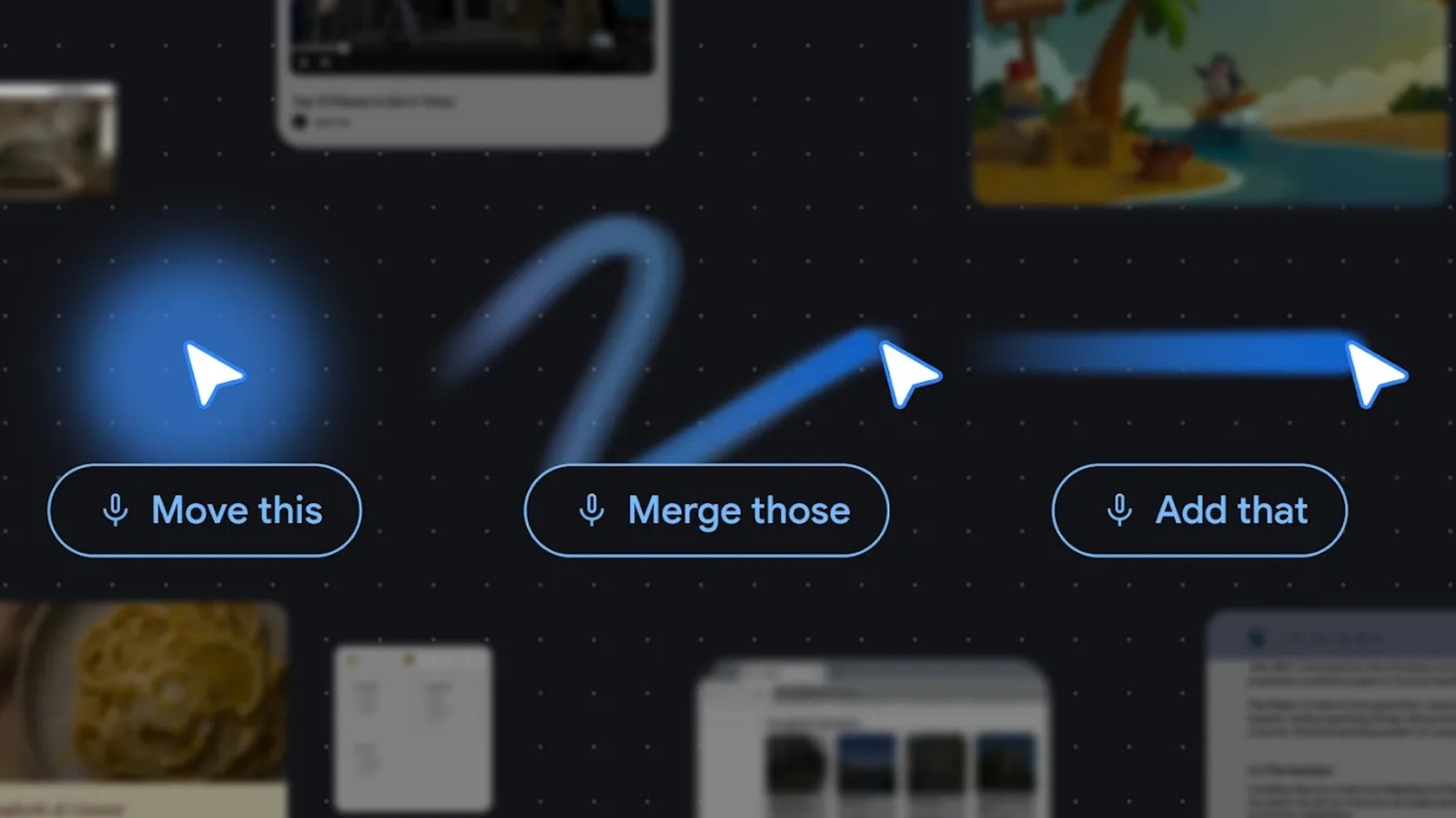
Google has officially launched Magic Pointer, the flagship AI feature for its Google Books platform that represents the search giant's most ambitious attempt yet to transform how people interact with written content. The feature, which uses Google's advanced language models to understand context and intent in real time, could fundamentally change the relationship between reading and research.
At its core, Magic Pointer works by analyzing the text you're currently reading and anticipating the questions or connections you might naturally form as you encounter unfamiliar terms, historical references, scientific concepts, or narrative threads. Rather than requiring users to break their reading flow, open a new tab, and search for context, Magic Pointer surfaces relevant information inline — effectively turning any book into a hyperlinked, annotated experience.
The technology builds on Google's existing AI capabilities but applies them in a way that feels distinctly different from traditional search or chatbot interactions. Instead of responding to explicit queries, the system reads alongside you, identifying moments where additional context would enrich understanding and presenting that context without being asked.
For non-fiction readers, this means that a reference to a 1987 regulatory change in a book about financial history could immediately surface the relevant statute, its historical context, and its downstream effects. For fiction readers, a reference to a cultural practice or historical event embedded in a novel's setting could be illuminated without pulling the reader out of the narrative.
The feature arrives at a moment when the intersection of AI and reading is becoming one of the most contested spaces in technology. Amazon has integrated AI summaries into Kindle. Apple has expanded its intelligent features across Apple Books. Startups like Readwise and Glasp are building AI-powered reading tools that layer analysis and connection atop existing content.
Google's advantage is its index. The company has spent two decades building the web's most comprehensive knowledge graph, and Magic Pointer draws on that infrastructure in ways that competitors cannot easily replicate. When the feature identifies a concept in a book, it isn't simply generating a summary — it's connecting that concept to Google's indexed understanding of how that concept relates to other ideas, events, and sources across the web.
Critics have raised concerns about accuracy and the potential for AI-generated context to distort an author's original intent. If Magic Pointer surfaces a historical interpretation that conflicts with the author's argument, which version does the reader trust? Google has said that the feature is designed to provide context, not commentary, and that it clearly labels AI-generated additions as such. But the boundary between providing context and shaping interpretation is inherently blurry, and early users have noted that the feature sometimes introduces framing that subtly influences how a passage is understood.
Privacy considerations are also relevant. Magic Pointer requires Google to track what users are reading in real time — a level of engagement data that goes well beyond what the company previously collected through Google Books. Google has stated that reading data processed by Magic Pointer is not used for ad targeting, but the company's history of walking back privacy commitments has left some users skeptical.
The feature is rolling out first on the web version of Google Books, with mobile apps expected to follow in the coming weeks. It is available for books in Google's scanned library, which includes millions of volumes, though the quality of the AI annotations is likely to vary based on the availability of relevant indexed content for any given topic.
For publishers and authors, Magic Pointer presents both an opportunity and a threat. The added context could make books more accessible and engaging, potentially driving readership. But it could also reduce the incentive for readers to seek out supplementary sources independently, effectively making Google the gatekeeper for all contextual knowledge encountered during reading.
What This Means For You: If you read for research, study, or professional development, Magic Pointer could save you significant time by eliminating the context-switching that breaks your flow. It's worth trying on your next non-fiction read — but verify any AI-generated context against primary sources when accuracy matters. If you're an author or publisher, consider how your work might be augmented or reshaped by inline AI annotations, and whether you want any say in how that happens. The feature is free to use and requires only a Google account — open Google Books and look for the Magic Pointer toggle in the reading toolbar.
Editorial Team
Originally sourced from SlashGear
Related Stories
YouTube is testing an AI search mode that \'feels more like a conversation\'
A new feature called Ask YouTube will let you pose complex questions and receive...
YouTube is testing an AI-powered search feature that shows guided answers
YouTube is rolling out the new AI search feature to Premium subscribers in the U.S. on an opt-in bas...
YouTube is giving creators a new weapon against AI deepfakes
YouTube is rolling out a new AI safety feature that could help creators spot deepfake-style videos u...